
Giulio Racah
Italian-Israeli physicist and mathematician known for atomic spectroscopy · 1909–1965
- Born
- February 9, 1909
- Died
- August 28, 1965
- Country
- Italy, Israel, Kingdom of Italy
- Section
- Physics
Biography
Giulio Racah (Florence, 1909 – Florence, 1965) was an Italian-Israeli physicist and mathematician whose work on the structure of atoms remains a standard tool in quantum physics. He lived through the rise of Fascism and the Second World War, and his life was shaped by the anti-Jewish laws in Italy. His work matters because he provided a general method for ordering the energy levels of more complex atoms, a task that had been very hard to carry out in practice.
Racah was born in Florence on 9 February 1909. Family accounts claimed that his mother's side descended from Jews who had reached Italy after the destruction of the Second Temple in Jerusalem in the year 70, though this genealogy is not independently documented. He graduated from the University of Florence in 1930 and then continued his studies in Rome under Enrico Fermi, one of the leading physicists of the twentieth century. The Rome years brought him into contact with modern theoretical physics and quantum mechanics, which was then being transformed.
In 1937 he became professor of physics at the University of Pisa. The application of anti-Jewish laws in Italy forced him to leave in 1939, and he emigrated to the British Mandate of Palestine. There he was appointed professor of theoretical physics at the Hebrew University of Jerusalem. He rose through the university's ranks to become dean of the Faculty of Sciences and later rector, serving as acting president from 1961 to 1962 after Benjamin Mazar and before Eliahu Eilat.
Racah's research centred on quantum physics and atomic spectroscopy, the study of the light that atoms emit or absorb and what it reveals about their inner workings. His first major achievement was a systematic general procedure for classifying the energy levels of open-shell atoms, those whose outer electrons do not fill their subshells. An energy level is, put simply, one of the discrete states an electron can occupy within an atom. The method still counts as the accepted technique for practical calculations of atomic structure. He described it in a monograph written with his cousin Ugo Fano, Irreducible Tensorial Sets, published in 1959.
During the 1948 Arab–Israeli War he served as deputy commander of the Israeli forces defending Mount Scopus, a strategic site in Jerusalem, which shows how closely academic life in Israel was tied to the events of those years.
In 1958 he received the Israel Prize in exact sciences, one of the country's highest scientific honours. He died in Florence in August 1965, at the age of 56, apparently asphyxiated by gas from a faulty heater while visiting the city. His legacy lives on in the Racah Institute of Physics at the Hebrew University, in the lunar crater Racah and in the asteroid (137217) Racah.
Main contributions
- 1930A general procedure for classifying the energy levels of open-shell atoms, still the accepted technique for calculating atomic structure.
- 1958Israel Prize in exact sciences, awarded for his work in physics.
- 1959Irreducible Tensorial Sets: a monograph written with his cousin Ugo Fano that sets out the mathematical formalism behind his atomic classification methods.
Teachers and students
Trivia and anecdotes
A lunar crater named after him
The Racah crater on the Moon is named in his memory, as is the asteroid (137217) Racah.
An accidental death
He died in Florence, apparently asphyxiated by gas from a faulty heater during a visit to the city.
Their contemporaries
While Giulio Racah was alive (1909–1965)…
Alive at the same time
Discovered or invented in those years
- 1916Black holeA region of space where gravity is so strong that nothing, not even light, can escape once it crosses a certain boundary.
- 1925TelevisionA system that sends moving pictures and sound over distance and shows them on a receiver, the television set.
- 1925Quantum mechanicsPhysical theory describing how matter and light behave at atomic and subatomic scales, where energy is exchanged in minimal packets and results are expressed as probabilities.
- 1931Big BangA cosmological model describing how the universe expanded from an early state of extreme density and temperature, about 13.8 billion years ago.
- 1932NeutronA subatomic particle with no net electric charge, found in the nucleus of almost every atom alongside protons.
- 1945ComputerA programmable machine that takes in data, processes it by following stored instructions, and produces results, able to switch tasks simply by running different software.
 Lev Landau1908–1968 · Physics
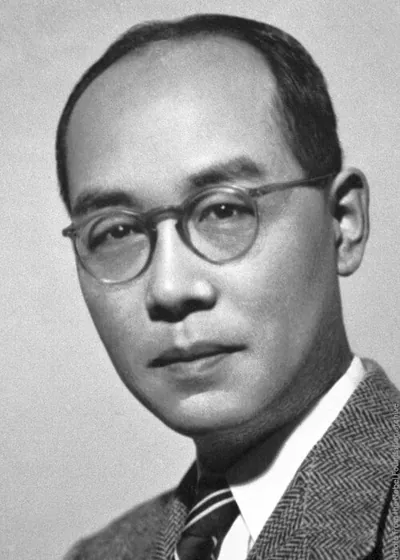 Hideki Yukawa1907–1981 · Physics
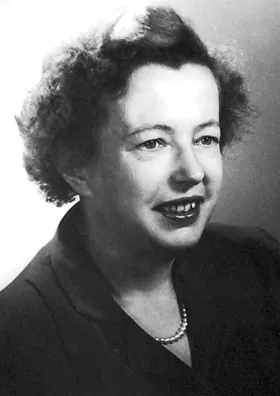 Maria Göppert Mayer1906–1972 · Physics
 Hans Bethe1906–2005 · Physics
 J. Robert Oppenheimer1904–1967 · Physics
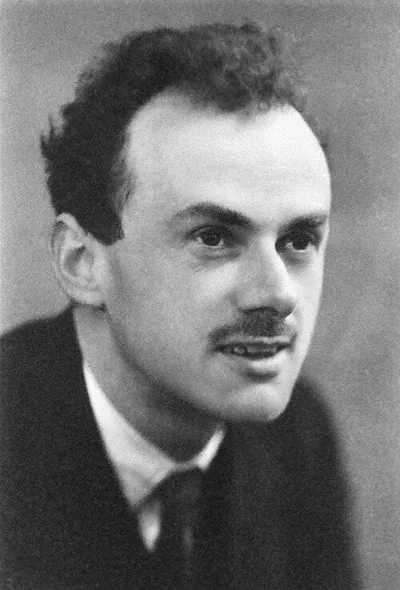 Paul Dirac1902–1984 · Physics
