
Hermann Joseph Muller
American biologist and geneticist, Nobel laureate for showing that X-rays cause mutations · 1890–1967
- Born
- December 21, 1890
- Died
- April 5, 1967
- Country
- United States
- Section
- Biology
- Awards
- Nobel Prize in Physiology or Medicine
Biography
Hermann Joseph Muller (New York, 1890 – Indianapolis, 1967) was an American biologist and geneticist who showed that X-rays can cause mutations in genes. For this discovery he received the 1946 Nobel Prize in Physiology or Medicine. His life spans the first half of the twentieth century, from fruit fly laboratories to Stalin's Soviet Union, the Spanish Civil War and the nuclear arms race, and his work remains a reference for understanding the risks of radiation.
Muller was the son of Frances Lyons and Hermann Joseph Muller Sr., a craftsman who worked with metals. His father's family was of Catholic origin and had come from Koblenz, while his mother's side combined Sephardic Jewish and Anglican ancestry. As a teenager he attended a Unitarian church and called himself a pantheist, and at high school he became an atheist. He did well in public schools and, at sixteen, entered Columbia College. From his first semester he was drawn to biology. He soon embraced the Mendelian-chromosome theory, which holds that genes sit on chromosomes and pass from parents to offspring in predictable ways, and the idea that genetic mutations and natural selection explain evolution. He founded a biology club and became a supporter of eugenics, the effort to improve human populations through controlled breeding. The relationship between biology and society would concern him for the rest of his life. He graduated in 1910.
He stayed at Columbia, then the leading zoology program in the United States, and became interested in the work on the fruit fly Drosophila being carried out in Thomas Hunt Morgan's laboratory. In 1911 and 1912 he studied metabolism at Cornell University while keeping ties with Columbia, and in 1912 he joined Morgan's group fully. His contributions there were mostly theoretical: he explained other people's results and proposed new experiments. Credit in that group went to whoever produced results rather than ideas, and Muller felt overlooked when he was left out of some major papers. In 1914 Julian Huxley offered him a post at the newly founded William Marsh Rice Institute in Houston, now Rice University. He hurried to finish his doctorate, awarded in 1916, and taught biology there while continuing his work with flies.
In 1918 he offered an explanation for the sudden changes Hugo de Vries had observed in the evening primrose Oenothera lamarckiana, changes on which de Vries based his mutation theory. Muller argued that so-called balanced lethals allowed hidden recessive mutations, which show only when inherited from both parents, to accumulate, and that occasional exchanges between chromosomes made them appear all at once. De Vries's results, in other words, could be explained by the Mendelian-chromosome theory. That same year Morgan, short of staff because many students had been drafted during the First World War, asked him to return to Columbia. There, with his close colleague and friend Edgar Altenburg, he studied lethal mutations by counting the sex ratio among the offspring of female flies. He found that the mutation rate varied strongly with temperature, which led him to think spontaneous mutations were the main source and to downplay outside causes such as radiation or chemicals. In 1919 he found a mutant that seemed to suppress the exchange of genetic material between chromosomes; it was later identified as a chromosomal inversion, and it opened new lines of research. His position at Columbia was not renewed, so in 1920 he accepted a post at the University of Texas, where he taught until 1932. Soon after arriving he married Jessie Marie Jacobs, a mathematics professor.
The first years in Texas were slow, since his mutation-rate data were hard to interpret. In 1923 he began using radium and X-rays, but the radiation also sterilized the flies, which made its effect hard to measure. Around this time his interest in eugenics and human genetics deepened. He studied twins separated at birth, whose results seemed to suggest a strong hereditary component to intelligence test scores. He criticized the anti-immigration tendencies of the eugenics movement but believed in positive eugenics, which aimed to encourage reproduction among people with desirable traits. In 1932, at the Third International Eugenics Congress in New York, he argued that eugenics could improve the human race only in a society consciously organized for the common good. That speech is often seen as the point at which eugenics began losing its appeal as a popular movement.
The major breakthrough came in 1926. In November he ran two experiments with different doses of X-rays, the second using the strain of flies carrying the crossing-over suppressor he had found in 1919. A clear, measurable link emerged between radiation and lethal mutations, the kind that kill the organism. He presented the results at the Fifth International Congress of Genetics in Berlin, in a paper called The Problem of Genetic Modification, and the news caused a media sensation that made him one of the best-known public intellectuals of his time. By 1928 other researchers had reproduced his results in wasps and maize. He then began warning about the dangers of radiation to people, for example doctors who used X-ray equipment routinely, or shoe sellers who X-rayed customers' feet to check the fit. The Great Depression shrank his laboratory, and after the stock market crash he grew sharply critical of capitalism. He helped edit and distribute The Spark, an illegal leftist student newspaper. His marriage was falling apart, and he was increasingly dissatisfied with life in Texas.
In September 1932 he moved to Berlin to work with the Russian-born geneticist Nikolay Timofeeff-Ressovsky. What was meant to be a sabbatical stretched into eight years and five countries. In Berlin he met the physicists Niels Bohr and Max Delbrück, who would later have a large influence on biology. Muller opposed the Nazi regime, which was driving scientists out of Germany, and the FBI was investigating his links to The Spark. He therefore chose the Soviet Union, which he believed suited his political views better. In 1933 he reconciled with his wife, and the couple settled in Leningrad. There he set up a Drosophila laboratory at the Institute of Genetics, importing the basic equipment and the flies. The institute moved to Moscow in 1934, and Muller divorced in 1935. He ran a large and productive laboratory and organized work in medical genetics, mostly focused on radiation. There he finished his book on eugenics, Out of the Night, whose main ideas dated back to 1910.
By 1936 Stalin's repressive policies and the rise of Lysenkoism had made the Soviet Union an increasingly hostile place for genetics. Trofim Lysenko promoted a Lamarckian theory of evolution, in which traits acquired during life are inherited, and rejected Mendelian heredity. Muller and other Russian geneticists tried to resist, but after Stalin read a translation of his eugenics book, he reportedly became displeased and ordered an attack on it. Muller had already requested leave, and in 1937 he left the country with about 250 strains of Drosophila. On the way he stopped in Madrid, where the Spanish Civil War had already begun, and helped organize medical services for the Republican side. He then settled at the University of Edinburgh, where he worked as an associate researcher for three years. In 1939 he married Dorothea Kantorowicz, known as Thea, a German refugee. That same year he wrote a Geneticists' Manifesto for the international congress held in Edinburgh, and he debated Richard Goldschmidt over whether the gene existed, when no direct physical evidence of it had yet been seen.
In 1940 he returned to the United States and took an untenured research position at Amherst College. After the country entered the Second World War, his position became open-ended and his teaching duties grew. During those years he studied the rate of spontaneous mutations, those not caused by radiation, and advised on the Manhattan Project without knowing exactly what it was, as well as studying the mutational effects of radar. His output dropped sharply because of the lack of laboratory staff. After the 1944–1945 academic year his Amherst appointment ended, and despite difficulties linked to his socialist activities, he secured a professorship of zoology at Indiana University, where he lived until his retirement.
In 1946 he received the Nobel Prize for showing that mutations can be induced by X-rays. The nature of the gene, both physical and physiological, had become a central question in biology, and X-ray mutagenesis had been a key tool in many advances. In his Nobel lecture he argued that no dose of radiation exists below which mutations fail to occur. This idea helped lead to the linear no-threshold model used to estimate cancer risk from radiation. The prize came in the wake of the bombings of Hiroshima and Nagasaki, which drew public attention to a subject Muller had been warning about for two decades. In the 1950s radioactive fallout from nuclear tests became a public concern, and the Castle Bravo incident in 1954 made the matter more pressing. Muller took part in many efforts against nuclear war. In 1955 he was one of eleven prominent intellectuals to sign the Russell-Einstein Manifesto, which led to the first Pugwash Conference in 1957. In 1958 he also signed a petition to the United Nations, promoted by the chemist Linus Pauling, calling for an end to nuclear weapons testing.
His views on radiation were used by Rachel Carson in Silent Spring, but other scientists criticized them. The geneticist James F. Crow considered his position alarmist. It has also been argued that his conclusions did not fit well with studies of the survivors of Hiroshima and Nagasaki or with research on mice, and that he set aside a study that contradicted the model he supported. Muller was also president of the American Humanist Association from 1956 to 1958 and received the Darwin-Wallace Medal of the Linnean Society of London in 1958. He retired in 1964 and died in 1967. His legacy is twofold. His work on mutations laid foundations for modern genetics and for protection against radiation. In Drosophila, the basic units of heredity, the arms of its chromosomes, are known as Muller elements in his honor.
Main contributions
- 1915Co-authored The Mechanism of Mendelian Heredity, a work explaining inheritance through genes located on chromosomes.
- 1918An explanation of the sudden changes in the plant Oenothera through balanced lethals, which store hidden mutations.
- 1919Discovery of a mutant that prevents crossing over between chromosomes, later identified as a chromosomal inversion.
- 1920A paper with Edgar Altenburg on modifier genes that set the wing size of mutant flies.
- 1926Demonstration that X-rays cause lethal mutations, with a measurable relation between dose and effect.
- 1939The Geneticists' Manifesto, proposing ways to improve the genetic quality of the world population.
- 1946Nobel Prize in Physiology or Medicine for inducing mutations with X-rays and for arguing that no safe threshold dose exists.
Teachers and students
Studied under:
Taught:
Trivia and anecdotes
A distant cousin of Ursula K. Le Guin
Muller was a distant cousin of the science fiction writer Ursula K. Le Guin through their shared paternal family.
A future science communicator in his lab
Carl Sagan worked in Muller's laboratory while he was still an undergraduate.
An underground newspaper
Muller helped edit The Spark, an illegal leftist student newspaper that drew the attention of the FBI.
Their contemporaries
While Hermann Joseph Muller was alive (1890–1967)…
Alive at the same time
Discovered or invented in those years
- 1897ElectronA negatively charged subatomic particle found in every atom, and key to electricity and chemical bonding.
- 1903AirplaneA fixed-wing aircraft, heavier than air, powered by engines or rockets, that stays aloft because its wings generate lift.
- 1925TelevisionA system that sends moving pictures and sound over distance and shows them on a receiver, the television set.
- 1925Quantum mechanicsPhysical theory describing how matter and light behave at atomic and subatomic scales, where energy is exchanged in minimal packets and results are expressed as probabilities.
- 1931Big BangA cosmological model describing how the universe expanded from an early state of extreme density and temperature, about 13.8 billion years ago.
- 1945ComputerA programmable machine that takes in data, processes it by following stored instructions, and produces results, able to switch tasks simply by running different software.
 J.B.S. Haldane1892–1964 · Biology
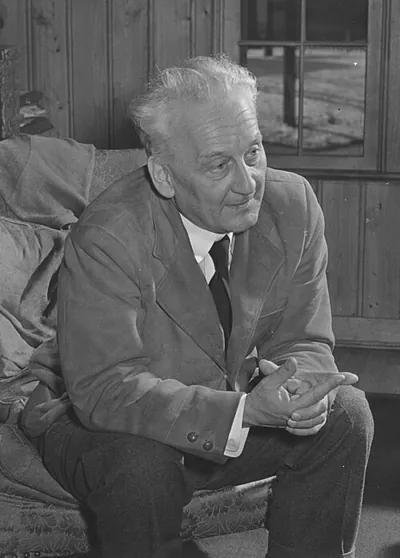 Albert Szent-Györgyi1893–1986 · Biology
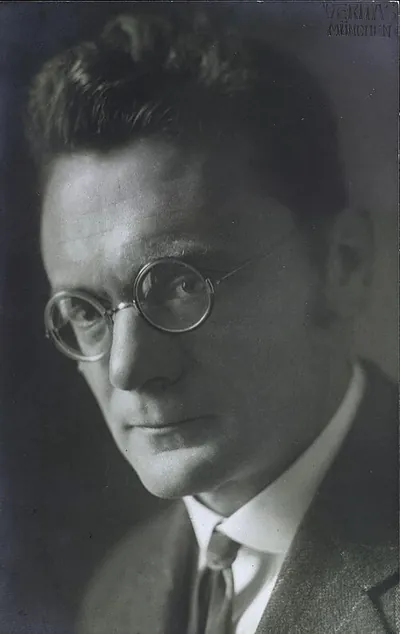 Karl von Frisch1886–1982 · Biology
 Gerty Cori1896–1957 · Biology
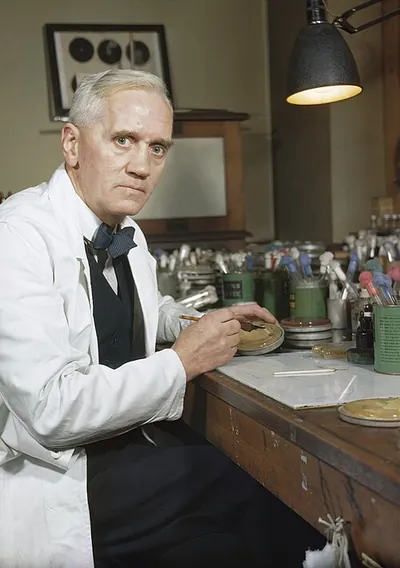 Alexander Fleming1881–1955 · Biology
 Hans Krebs1900–1981 · Biology
