
Melba Phillips
American physicist and pioneering science educator · 1907–2004
- Born
- February 1, 1907
- Died
- November 8, 2004
- Country
- United States
- Section
- Physics
Biography
Melba Newell Phillips (Hazleton, Indiana, 1907 – Petersburg, Indiana, 2004) was an American physicist and one of the most influential physics educators of her generation. She was one of the first doctoral students of J. Robert Oppenheimer at a time when few women could build a career in science. She is remembered for her early work in nuclear physics and for her long commitment to teaching physics well.
Born on February 1, 1907, near Hazleton in Indiana, she was the only daughter and the eldest of four children. She finished high school at fifteen and earned a bachelor's degree in mathematics at Oakland City College in 1926. She first meant to become a teacher and spent two years teaching at her old high school. She then took a master's degree in physics at Battle Creek College in Michigan in 1928 and a PhD at the University of California, Berkeley, in 1933 under Oppenheimer, who would later lead the scientific work of the Manhattan Project.
In 1935 Oppenheimer and Phillips published an account of what is now called the Oppenheimer-Phillips process, which described how accelerated nuclei of radioactive "heavy hydrogen" behaved. It was among the earliest contributions to nuclear physics. Her research applied quantum mechanics, the theory governing the very small, to the atomic nucleus. After postdoctoral fellowships at Berkeley and Bryn Mawr she worked at the Institute for Advanced Study in Princeton, and in 1938 she took a full-time physics professorship at Brooklyn College. Apart from three years at the University of Minnesota during the Second World War, she stayed there for fourteen years.
In 1952, during the McCarthy era, she was called before a Senate judiciary subcommittee investigating internal security. She answered questions about her scientific work but invoked the Fifth Amendment when asked whether she had been a member of the Communist Party. Her refusal to cooperate cost her the post at Brooklyn College and her position at the Columbia University Radiation Laboratory. For five years she could not find work as a college professor and lived on her savings, and in that period she co-wrote two textbooks that became standard in university science courses.
She returned to teaching in 1957 as associate director of a teacher-training institute at Washington University in St. Louis, and in 1962 joined the University of Chicago as a professor of physics. There she introduced physical science courses for non-science students and gave laboratory work a larger place in the curriculum. She was also a central figure in the American Association of Physics Teachers, becoming its first woman president in 1966-67. She retired in 1972 but kept teaching at Stony Brook University and in China. The association created the Melba Newell Phillips Medal in her honour in 1981. Brooklyn College publicly apologised for her dismissal in 1987. She died in 2004, aged ninety-seven.
Main contributions
- 1935Oppenheimer-Phillips process: describes the behaviour of accelerated nuclei of radioactive heavy hydrogen, one of the earliest contributions to nuclear physics.
- 1955Classical Electricity and Magnetism, a textbook co-written with Wolfgang Panofsky on classical electricity and magnetism.
- 1957Principles of Physical Science, a textbook co-written with Francis Bonner that became a standard in university science courses.
- 1962Principles of Electrodynamics and Relativity, written with P. G. Bergmann on electrodynamics and relativity.
- 1979On Teaching Physics, a collection of American Journal of Physics articles from the association's first half century.
Teachers and students
Trivia and anecdotes
A pioneering presidency
She was the first woman to lead the American Association of Physics Teachers, in 1966-1967.
A belated apology
Brooklyn College publicly apologised in 1987 for her 1952 dismissal, thirty-five years later.
Their contemporaries
While Melba Phillips was alive (1907–2004)…
Alive at the same time
Discovered or invented in those years
- 1916Black holeA region of space where gravity is so strong that nothing, not even light, can escape once it crosses a certain boundary.
- 1925TelevisionA system that sends moving pictures and sound over distance and shows them on a receiver, the television set.
- 1925Quantum mechanicsPhysical theory describing how matter and light behave at atomic and subatomic scales, where energy is exchanged in minimal packets and results are expressed as probabilities.
- 1931Big BangA cosmological model describing how the universe expanded from an early state of extreme density and temperature, about 13.8 billion years ago.
- 1945ComputerA programmable machine that takes in data, processes it by following stored instructions, and produces results, able to switch tasks simply by running different software.
- 1969InternetA global network of interconnected computer networks that communicate using the TCP/IP protocol suite.
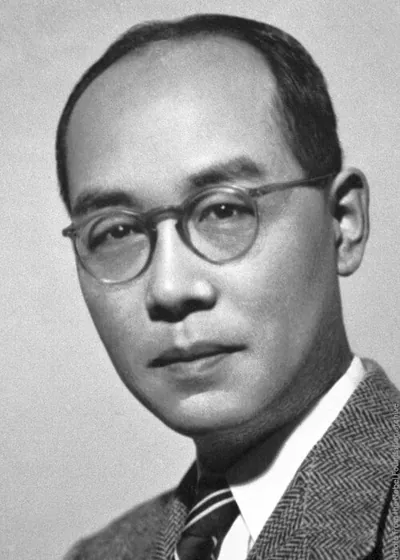 Hideki Yukawa1907–1981 · Physics
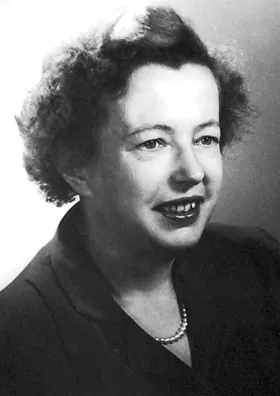 Maria Göppert Mayer1906–1972 · Physics
 Lev Landau1908–1968 · Physics
 Hans Bethe1906–2005 · Physics
 J. Robert Oppenheimer1904–1967 · Physics
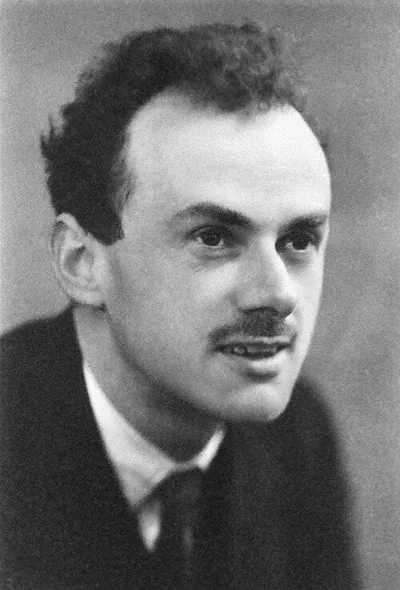 Paul Dirac1902–1984 · Physics
