
Jeff Dean
American computer scientist and software engineer, a key architect of Google's infrastructure and head of its artificial intelligence division · 1968
- Born
- July 23, 1968
- Country
- United States
- Section
- Computing
Biography
Jeffrey Adgate "Jeff" Dean (born July 23, 1968) is an American computer scientist and software engineer whose work has shaped how large-scale computing is done. He joined Google in 1999 and spent most of his career there, building systems that store, process and search information for billions of users. He later led the company's artificial intelligence efforts and became one of the most visible figures in the field.
Dean earned a bachelor's degree summa cum laude from the University of Minnesota in 1990, in computer science and economics. His undergraduate thesis dealt with neural networks written in C, supervised by Vipin Kumar. He then completed a PhD at the University of Washington in 1996, working with Craig Chambers on compilers, the programs that translate human-written code into instructions a computer can run, and on whole-program optimization, which analyzes an entire program to make it faster. Before joining Google he worked at DEC/Compaq's Western Research Laboratory on profiling tools, which measure where a program spends its time, on microprocessor design and on information retrieval. Much of this work was done with Sanjay Ghemawat, his closest long-term collaborator. Earlier, before graduate school, he had worked for the World Health Organization's global AIDS programme, writing software to model and forecast the HIV/AIDS epidemic.
At Google, Dean designed and built large parts of the company's advertising, web crawling, indexing and query-serving systems, along with much of the distributed computing infrastructure beneath most of its products. Distributed computing means spreading work across thousands of machines that behave like a single system. His projects include Bigtable, a large-scale storage system for semi-structured data; MapReduce, a model for processing huge datasets by splitting tasks across many machines; Spanner, a globally distributed database; and LevelDB, an open-source key-value store. He also contributed to the production system design and the statistical machine translation system behind Google Translate, which learns to translate from large collections of text. Dean was also an early designer of Protocol Buffers, an open-source format for exchanging structured data.
His move toward deep learning came through DistBelief, a proprietary system for training deep neural networks, layered models of simple computing units loosely inspired by the brain. It was later refactored into TensorFlow, an open-source machine-learning library that became one of the most widely used tools in the field. Dean was an early member of Google Brain, formed in 2011 from a project that grew out of an investigation of deep networks. That project produced the "cat neuron paper", in which a network trained without labels on YouTube videos learned to recognize cats. Dean led the team from 2012 and in 2018 took charge of Google's whole AI division. In 2023, after Google Brain merged with DeepMind, he became the company's chief scientist. In 2026 Google announced his departure, and he co-founded Discovery Loop, a startup that aims to apply AI to research in areas such as chip design and drug discovery.
His time at Google also brought controversy. When the AI ethics researcher Timnit Gebru challenged the company's review process for a research paper, her departure from Google drew strong criticism. Dean responded with a public letter on the company's approach to research, which in turn drew further criticism. Outside his work, Dean is married to Heidi Hopper, and the couple founded the Hopper-Dean Foundation in 2011 to make philanthropic grants. In 2016 it gave two million dollars each to five American universities to support programs promoting diversity in science, technology, engineering and mathematics. The couple have two daughters.
His legacy lies both in the systems he helped build and in how widely the industry adopted them. Bigtable, MapReduce and TensorFlow are used by countless engineers, and his name has become the centre of an internet meme, the "Jeff Dean facts", which jokingly exaggerate his programming skill. These are community jokes rather than verifiable accounts. He has received honours including the ACM Prize in Computing and the IEEE John von Neumann Medal, and his influence reaches a generation of engineers now working on artificial intelligence.
Main contributions
- 2004MapReduce: a programming model, developed with Sanjay Ghemawat, that spreads the processing of large volumes of data across many computers.
- 2006Bigtable: a distributed storage system for large-scale semi-structured data.
- 2011DistBelief: a proprietary system for training deep neural networks, later refactored into TensorFlow.
- 2011Protocol Buffers: an open format for exchanging structured data, whose original design was his.
- 2012Spanner: a scalable, globally distributed database with synchronous replication.
- 2015TensorFlow: an open-source machine-learning library whose initial system he primarily designed and implemented.
Teachers and students
Trivia and anecdotes
The cat neuron paper
A Google Brain study trained a network without labels on YouTube videos, and the network learned to recognize cats.
Jeff Dean facts
He is the subject of an internet meme that exaggerates his programming skills; these are jokes, not verifiable facts.
Their contemporaries
While Jeff Dean was alive (1968–)…
Alive at the same time
Discovered or invented in those years
- 1969InternetA global network of interconnected computer networks that communicate using the TCP/IP protocol suite.
- 1971EmailA network service that lets users send and receive digital messages through addressed mailboxes, much like postal mail but electronic.
- 1973Mobile phoneA handheld wireless phone that lets people make and receive calls while moving across a cellular network area.
- 1975Global warmingThe long-term rise in Earth's average surface temperature, driven mainly by greenhouse gases released through human activity.
- 1989World Wide WebA system of linked documents and resources, connected by hyperlinks and accessed over the Internet with web browsers.
- 1990Web browserA program that lets people access the web by fetching a page's files from a server and displaying them on screen as an interactive page.
 Linus Torvalds1969 · Computing
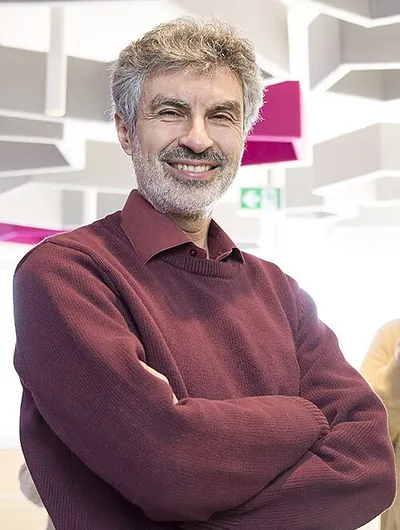 Yoshua Bengio1964 · Computing
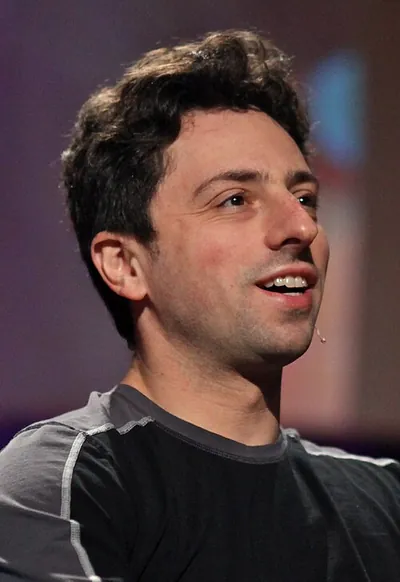 Sergey Brin1973 · Computing
 Andrew Y. Ng1976 · Computing
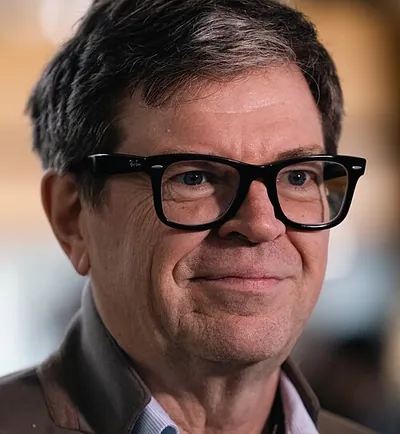 Yann LeCun1959 · Computing
 Shafrira Goldwasser1958 · Computing
