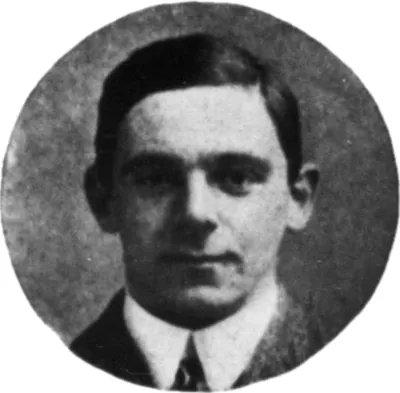
John Edensor Littlewood
British mathematician known for his long partnership with G. H. Hardy and for his work in number theory, analysis and differential equations · 1885–1977
- Born
- June 9, 1885
- Died
- September 6, 1977
- Country
- United Kingdom
- Section
- Mathematics
Biography
John Edensor Littlewood (Rochester, 1885 – 1977) was a British mathematician who worked on analysis, number theory and differential equations. He is best remembered for his long partnership with G. H. Hardy, one of the most productive collaborations in English mathematics of his time. His work linked the theory of prime numbers with mathematical analysis and opened paths that are now central to the study of dynamical systems.
He was born on 9 June 1885 in Rochester, in Kent, the eldest son of Edward Thornton Littlewood and Sylvia Maud Ackland. In 1892 his father became headmaster of a school in Wynberg, near Cape Town, and the family moved to South Africa. In 1900 Littlewood returned to Britain to attend St Paul's School in London, where he studied under Francis Sowerby Macaulay, an influential algebraic geometer.
In 1903 he entered Trinity College, Cambridge. In 1905 he emerged as Senior Wrangler, the top place in the Tripos, the examinations that qualified undergraduates for their degree, sharing it with James Mercer, who had already graduated from the University of Manchester. In 1906 he began research under Ernest Barnes, who suggested he try to prove the Riemann hypothesis, a conjecture about how prime numbers are spread out that remains unproven. Littlewood did not succeed in that, but he showed that if the Riemann hypothesis is true, the prime number theorem follows and its error can be estimated. This work won him a fellowship at Trinity in 1908. From 1907 to 1910 he was Richardson Lecturer at the University of Manchester, and in October 1910 he returned to Cambridge, where he stayed for the rest of his career.
The link between the Riemann hypothesis and the prime number theorem had already been known on the European continent, a fact Littlewood later acknowledged in his book of reminiscences, A Mathematician's Miscellany, where he saw it as a sign of the isolation of British mathematics at the time. In 1914 he published his first result in analytic number theory. The function π(x) counts the primes up to x and is approximated by the logarithmic integral Li(x). Numerical calculations suggested that π(x) always stayed below Li(x). Littlewood proved that the difference between the two changes sign infinitely often, which overturned a conjecture that had been suggested by Gauss about this overestimation.
For some 35 years he collaborated with G. H. Hardy. Together they worked on series, the Riemann zeta function, inequalities and function theory. Among their best-known contributions are the Hardy-Littlewood conjectures on twin primes, pairs of primes that differ by two, and a conjecture about how many primes lie in given intervals. Both men also recognised the genius of the Indian mathematician Srinivasa Ramanujan, a self-taught mathematician, and supported his journey from India to work in Cambridge. Ramanujan later became a Fellow of the Royal Society and of Trinity College.
During the First World War he served in the Royal Garrison Artillery as a second lieutenant and made highly significant contributions to ballistics, the study of how projectiles travel. In the late 1930s, as war seemed increasingly likely, the Department of Scientific and Industrial Research asked pure mathematicians to study non-linear differential equations, equations in which the response is not proportional to the cause, which radio engineers and scientists needed. Littlewood and Mary Cartwright worked on these problems independently for about twenty years. Their work foreshadowed the modern theory of dynamical systems, which studies how systems governed by mathematical rules change over time.
He received many honours. He was elected a Fellow of the Royal Society in 1916 and was awarded the Royal Medal in 1929, the De Morgan Medal in 1938, the Sylvester Medal in 1943, the Copley Medal in 1958 and the Senior Berwick Prize in 1960. He held the Rouse Ball Professorship of Mathematics from 1928 until his retirement in 1950, and he was president of the London Mathematical Society from 1941 to 1943.
He went on writing papers well into his eighties. His doctoral students included Sarvadaman Chowla, Harold Davenport and Donald C. Spencer. Much of his collaborative work was carried out by correspondence, especially on Diophantine approximation and Waring's problem. With Raymond Paley he developed Littlewood-Paley theory, a tool in Fourier analysis, and with Cyril Offord he studied random sums. He died on 6 September 1977.
His legacy is twofold. His results on prime numbers and analysis remain starting points for current research, and his reminiscences helped make mathematics and its history in Britain accessible to a wider public.
Main contributions
- 1908Prime number theorem under the Riemann hypothesis: he showed that if the Riemann hypothesis is true, the prime number theorem holds and its error can be bounded.
- 1914Difference between π(x) and Li(x): he proved that the difference between the number of primes and the logarithmic integral changes sign infinitely often, refuting a conjecture of Gauss.
- Hardy-Littlewood conjectures: proposed with G. H. Hardy, they are conjectures about the distribution of twin primes and other prime patterns.
- Littlewood-Paley theory: a tool of Fourier analysis developed with Raymond Paley, describing how a function's energy is distributed among its components.
- Non-linear differential equations: work with Mary Cartwright on systems that foreshadowed modern dynamical systems theory.
- 4/3 inequality on bilinear forms: a forerunner of the later tensor norm theory of Grothendieck.
Teachers and students
Studied under:
Taught:
Trivia and anecdotes
A mathematician who did not exist
According to an anecdote recorded in several sources, the German mathematician Edmund Landau came to suspect that Littlewood was a pseudonym used by Hardy, and travelled to Cambridge to check. The story is considered doubtful.
The law of miracles
Littlewood coined Littlewood's law, which says that each person can expect a «miracle» about once a month. It is a joke about probability and surprise rather than a formal mathematical result.
Their contemporaries
While John Edensor Littlewood was alive (1885–1977)…
Alive at the same time
Discovered or invented in those years
- 1903AirplaneA fixed-wing aircraft, heavier than air, powered by engines or rockets, that stays aloft because its wings generate lift.
- 1925TelevisionA system that sends moving pictures and sound over distance and shows them on a receiver, the television set.
- 1925Quantum mechanicsPhysical theory describing how matter and light behave at atomic and subatomic scales, where energy is exchanged in minimal packets and results are expressed as probabilities.
- 1931Big BangA cosmological model describing how the universe expanded from an early state of extreme density and temperature, about 13.8 billion years ago.
- 1945ComputerA programmable machine that takes in data, processes it by following stored instructions, and produces results, able to switch tasks simply by running different software.
- 1969InternetA global network of interconnected computer networks that communicate using the TCP/IP protocol suite.
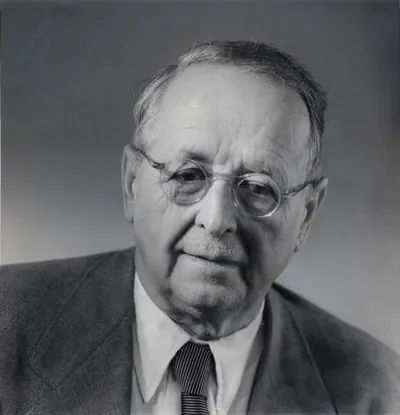 Hermann Weyl1885–1955 · Mathematics
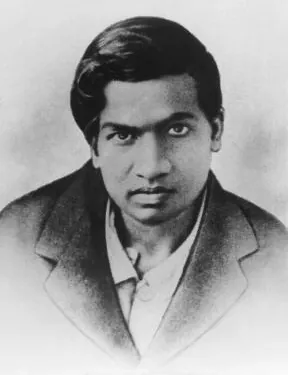 Srinivasa Ramanujan1887–1920 · Mathematics
 Emmy Noether1882–1935 · Mathematics
 Ronald Fisher1890–1962 · Mathematics
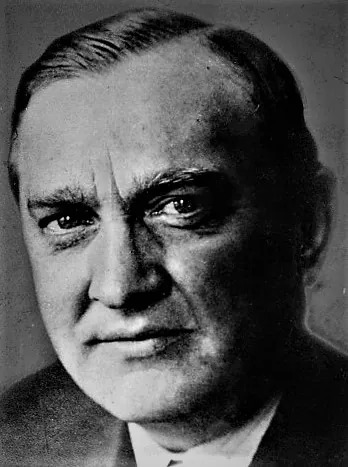 Stefan Banach1892–1945 · Mathematics
 G.H. Hardy1877–1947 · Mathematics
