
Louis Nirenberg
Canadian-American mathematician specializing in partial differential equations, regarded as one of the leading analysts of the 20th century · 1925–2020
- Born
- February 28, 1925
- Died
- January 26, 2020
- Country
- Canada, United States
- Section
- Mathematics
Biography
Louis Nirenberg (Hamilton, Ontario, 1925 – New York, 2020) was a Canadian-American mathematician, widely regarded as one of the most distinguished analysts of the twentieth century. Almost all of his work lay in partial differential equations, the mathematical expressions that describe how quantities such as temperature, pressure or the shape of a surface change in several directions at once. His results underpin much of modern analysis, geometry and complex analysis, and several of his theorems appear in nearly every textbook on the subject.
He was born in Hamilton, in the Canadian province of Ontario, to Jewish immigrants from the Russian Empire. He attended Baron Byng High School and then McGill University in Montreal, where he graduated in 1945 with a combined degree in mathematics and physics. A summer job at Canada's National Research Council brought him into contact with Sara Paul, the wife of Ernest Courant. She spoke to Ernest's father, the eminent mathematician Richard Courant, for advice on where Nirenberg should study theoretical physics. Following that conversation he was invited to join the Courant Institute of Mathematical Sciences at New York University, an institution Richard Courant had founded and which became his academic home for the rest of his life.
In 1949 he earned his doctorate in mathematics under James Stoker. His thesis settled the so-called Weyl problem, a question in differential geometry that had been open since 1916 and asks when a positively curved surface can be embedded in three-dimensional space while preserving the distances measured on it. He tackled it with techniques for fully nonlinear elliptic equations, a class far harder to control than linear ones. The same thesis also addressed the Minkowski problem, which concerns the shape of closed surfaces determined by their curvature. After his doctorate he stayed on as a professor at the Courant Institute, where he remained for his entire career.
His approach rested on a simple goal: for many equations describing systems in balance, one wants to show that a solution exists, is unique, and is smooth, without abrupt jumps. Nirenberg extended Charles Morrey's results on nearly linear equations in two dimensions to fully nonlinear cases, and he showed how solutions of elliptic systems inherit the regularity of their coefficients. Together with Avron Douglis and Shmuel Agmon he developed the Agmon-Douglis-Nirenberg estimates, now standard tools. With Morrey he proved that solutions of such systems with analytic coefficients are themselves analytic. By the 1950s his work on elliptic regularity had become a package of results taught in almost every textbook.
Another central theme was the maximum principle, which says that a solution of a certain equation reaches its extreme values on the boundary of its domain. Eberhard Hopf had proved it for elliptic equations, and Nirenberg adapted the argument to second-order parabolic equations, which describe phenomena such as the spread of heat. The resulting strong maximum principle is now one of the foundations of parabolic theory. Later, with Basilis Gidas and Wei-Ming Ni, he used the principle to show that many solutions inherit the symmetries of the domain on which they are defined. This allows certain problems about partial differential equations to be reduced to simpler ordinary differential equations. With Henri Berestycki he extended these methods to domains without assumed regularity.
Functional inequalities form another important strand. Working independently of Emilio Gagliardo, Nirenberg proved inequalities for Sobolev spaces that are now called the Gagliardo-Nirenberg inequalities, and they are used constantly in the study of differential equations. With Fritz John he studied the space BMO, bounded mean oscillation, which John had introduced while investigating elastic materials. Their work produced the John-Nirenberg inequality, which limits how far a function can stray from its average value. The result also matters in probability, including the games of chance modelled by martingales.
His best-known collaboration in fluid mechanics was with Luis Caffarelli and Robert Kohn in 1982. The Navier-Stokes equations describe the motion of fluids such as water and air, and it is still unknown whether their solutions always stay smooth in three dimensions; the question is one of the Clay Millennium Problems. The Caffarelli, Kohn and Nirenberg paper showed that any singularities must be confined to a very small set in space-time, and it became a standard reference. In 2014 the American Mathematical Society recognised it with the Steele Prize for Seminal Contribution to Research.
He also worked closely with Haïm Brezis on critical point theory, with Eugenio Calabi on the Monge-Ampère equation, and with Yanyan Li on linear elliptic systems inspired by composite materials. With Brezis and Jean-Michel Coron he used the mountain pass theorem to find periodic solutions of wave equations. He supervised 45 doctoral students and published more than 150 papers, many with coauthors. He kept working into his late eighties and died in New York on 26 January 2020, aged 94.
His work earned many honours. He was elected to the American Academy of Arts and Sciences in 1965, to the US National Academy of Sciences in 1969 and to the American Philosophical Society in 1987. He received the Bôcher Prize in 1959, the Crafoord Prize in 1982, the Steele Prize for Lifetime Achievement in 1994, the National Medal of Science in 1995 and the Chern Medal in 2010, and in 2015 he shared the Abel Prize with John Nash. His legacy lives on in textbooks on partial differential equations, in the theorems and inequalities that bear his name, and in the way modern mathematics approaches problems in analysis, geometry and physics.
Main contributions
- 1949Settling the Weyl problem in his doctoral thesis: determining when a positively curved surface can be embedded in three-dimensional space while preserving its distances.
- 1950Extending Morrey's results to fully nonlinear elliptic equations, work linked to his thesis.
- 1958Agmon-Douglis-Nirenberg estimates for elliptic systems, now standard tools in partial differential equations.
- 1961The John-Nirenberg inequality on functions of bounded mean oscillation, with applications to elastic materials and probability.
- 1982Work with Caffarelli and Kohn on the Navier-Stokes equations, limiting where singularities can appear.
- 1982The Newlander-Nirenberg theorem, which gives the algebraic condition under which an almost complex structure comes from a holomorphic atlas.
Teachers and students
Studied under:
Taught:
Trivia and anecdotes
A chance meeting
His link to the Courant Institute began with a summer job in Canada, when Sara Paul spoke to Richard Courant to advise him.
A theorem with a shared name
The Newlander-Nirenberg theorem is named after his joint work with his doctoral student August Newlander, answering a question posed by Chern and Weil.
Their contemporaries
While Louis Nirenberg was alive (1925–2020)…
Alive at the same time
Discovered or invented in those years
- 1925TelevisionA system that sends moving pictures and sound over distance and shows them on a receiver, the television set.
- 1925Quantum mechanicsPhysical theory describing how matter and light behave at atomic and subatomic scales, where energy is exchanged in minimal packets and results are expressed as probabilities.
- 1931Big BangA cosmological model describing how the universe expanded from an early state of extreme density and temperature, about 13.8 billion years ago.
- 1945ComputerA programmable machine that takes in data, processes it by following stored instructions, and produces results, able to switch tasks simply by running different software.
- 1969InternetA global network of interconnected computer networks that communicate using the TCP/IP protocol suite.
- 1989World Wide WebA system of linked documents and resources, connected by hyperlinks and accessed over the Internet with web browsers.
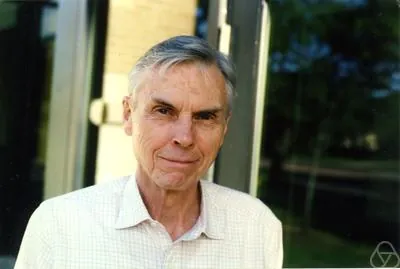 John Tate1925–2019 · Mathematics
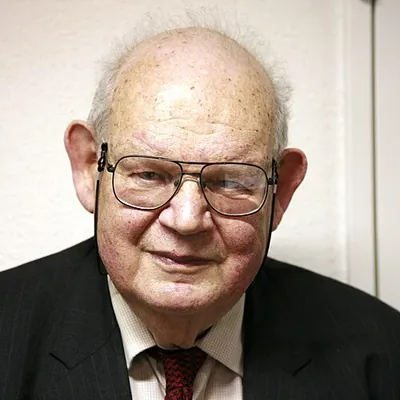 Benoit Mandelbrot1924–2010 · Mathematics
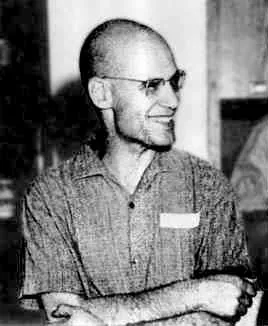 Alexander Grothendieck1928–2014 · Mathematics
 Robert Aumann1930 · Mathematics
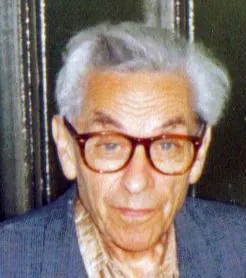 Paul Erdős1913–1996 · Mathematics
 Vladimir Arnold1937–2010 · Mathematics
