
Maria Angela Ardinghelli
Neapolitan translator, mathematician and physicist, known for rendering Stephen Hales's works into Italian · 1728–1825
- Born
- May 28, 1728
- Died
- February 17, 1825
- Country
- Kingdom of Naples
- Section
- Mathematics
Biography
Maria Angela Ardinghelli (Naples, 28 May 1728 – Naples, 17 February 1825) was an Italian translator, mathematician and physicist from a noble family. She lived in the eighteenth century, when few women could pursue science, and she is remembered today mainly as a bridge between the scientists of Naples and those of Paris, and as the translator into Italian of key works by the English physiologist Stephen Hales.
She was born in Naples, then part of the Kingdom of Naples, into a noble family of Florentine origin. Her brother died in childhood, which left her an only child, and her father took charge of her education himself. By the age of fourteen she spoke Latin fluently. She studied philosophy, physical sciences and mathematics with Pietro Della Torre and Vito Caravelli, and she also learned English and French. Her family was not aristocratic in the strict sense, nor part of the rising middle class. It came from Florence and moved to Naples when the Medici rose to power in Tuscany.
Like other women of her class, she cultivated poetry and Latin, but she stood out for her command of mathematical physics. Around 1747 she joined the circle of the prince of Tarsia, whose library and laboratory proved very useful to her. There, Newton's ideas, electricity and experimental physics were studied. Ardinghelli chose to stay in Naples for the rest of her life. She turned down a marriage proposal from the French architect Julien Leroy and the chance to become scientific tutor to the royal princesses at Versailles, because she would not leave her family. At home she hosted gatherings known as conversazioni, which drew travelling naturalists, and she corresponded with the Paris Academy of Sciences as an informal correspondent.
Her best-known work was her translation of Haemastaticks, Hales's study of blood pressure in vessels, which she published in Italian in 1750 as Emastatica. She then translated Vegetable Staticks, which deals with the movement of sap in plants. Hales had measured blood pressure in animal arteries and the force with which water rises through plant stems. Ardinghelli made his findings available to Italian readers and added notes and passages of her own, something translators of the period rarely did. She also carried out experiments inspired by Hales's research.
Her fame came through the abbé Jean-Antoine Nollet, a well-known figure in physics. He met her in 1749, during a journey through Italy, at one of her gatherings. In a letter he praised her as a very virtuous young woman who had made great progress in physics in a short time. This public praise brought her to the attention of European scientific circles. Over time she guarded her anonymity and chose carefully which works to sign and for which audiences, which allowed her to keep her standing without the isolation or ridicule that often met women who published.
Her historical invisibility was long, but the historian Paola Bertucci uncovered other anonymous translations by her, including sections of Buffon's Histoire naturelle. Her work is now seen as an example of how eighteenth-century women helped circulate scientific knowledge, though often without formal recognition.
Main contributions
- 1749Informal correspondent of the Paris Academy of Sciences, linking Neapolitan and French science.
- 1750Italian translation of Stephen Hales's Haemastaticks, on blood pressure in vessels, published as Emastatica.
- 1756Italian translation of Hales's Vegetable Staticks, dealing with the movement of sap in plants.
Trivia and anecdotes
Nollet's praise
In a letter to a colleague, the abbé Nollet described her as a very virtuous young woman who had progressed greatly in physics. That praise made her known.
Anonymous translations
The historian Paola Bertucci found other translations by her published without a signature, among them parts of Buffon's Histoire naturelle.
Their contemporaries
While Maria Angela Ardinghelli was alive (1728–1825)…
Alive at the same time
Discovered or invented in those years
- 1766HydrogenThe lightest and most abundant chemical element in the universe, atomic number 1, which under normal conditions is a colourless, odourless and highly flammable gas.
- 1772NitrogenChemical element with atomic number 7, a colourless, odourless gas that makes up about 78% of Earth's air and is an essential part of proteins and nucleic acids.
- 1774OxygenA colorless, odorless gas, symbol O and atomic number 8, that forms the dioxygen in air and is essential for respiration in most living things.
- 1781UranusThe seventh planet from the Sun, an ice giant discovered by William Herschel in 1781, the first planet found with a telescope.
- 1803AtomThe basic unit of a chemical element: a nucleus of protons and usually neutrons surrounded by a cloud of electrons.
- 1821ElectricityThe set of physical phenomena linked to the presence and movement of electric charge, and one of the most versatile forms of energy in modern life.
 Joseph-Louis Lagrange1736–1813 · Mathematics
 Gaspard Monge1746–1818 · Mathematics
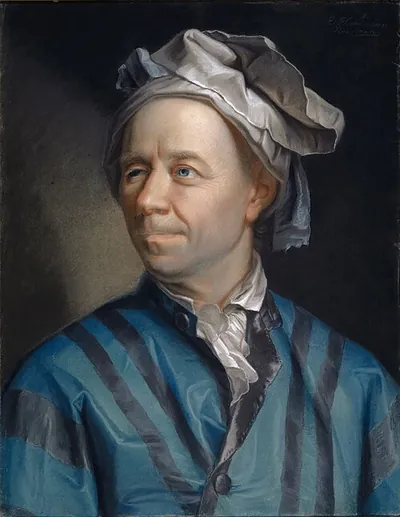 Leonhard Euler1707–1783 · Mathematics
 Pierre-Simon Laplace1749–1827 · Mathematics
 Daniel Bernoulli1700–1782 · Mathematics
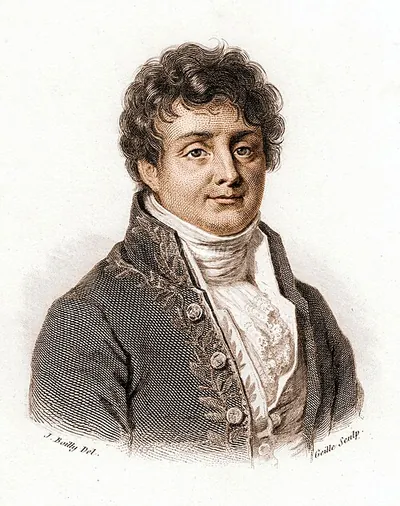 Joseph Fourier1768–1830 · Mathematics
