
Mikhail Aleksandrovich Bonch-Bruevich
Russian engineer, scientist and professor, a pioneer of radio and radio-location · 1888–1940
- Born
- February 21, 1888
- Died
- March 7, 1940
- Country
- Soviet Union
- Section
- Technology and communications
Biography
Mikhail Aleksandrovich Bonch-Bruevich was a Russian engineer, scientist and professor, regarded as the leading authority on radio in the Russian Empire and the Soviet Union in the first decades of the twentieth century. His work paved the way for radio-location, the forerunner of radar.
He was born in Oryol, in central Russia, into a family of Polish origin that moved to Kiev in 1896. After engineering studies in St Petersburg, he trained at the Imperial Institute of Electrical Engineering, where he completed his dissertation in 1914.
Assigned to the Central Laboratory of the War Department, he focused on vacuum tubes, glass components that amplify and generate electrical signals and were the heart of radio at the time. In 1917 he ran the tube factory he had helped set up, one of the first in Russia, while teaching at the electrotechnical institute in Leningrad.
In 1918 he joined the Nizhny Novgorod Radio Laboratory, where he designed a water-cooled tube of 40 kilowatts that powered the Komintern station in Moscow, one of the most powerful in the world. He promoted radio broadcasting and built 27 stations in various cities. Lenin sought his advice on radio and in 1920 wrote him a letter of thanks.
After the Soviet Union was founded in 1922, the laboratory became a state research centre and he was appointed its technical director. In 1931 it moved to Leningrad, and in one project he used radio pulses to study the ionosphere, the upper layer of the atmosphere that reflects radio waves.
In 1933 the Red Army asked him for a device to detect aircraft at night or above clouds. In January 1934 his team received the echo of an aircraft about 600 metres away, a frequency shift caused by its motion, which showed that radio detection was possible. He championed continuous-wave transmission for this purpose and led the Burya system in 1936.
In 1937, during Stalin's Great Purge, the work stopped and the institute's director was arrested. According to the usual account, his standing with Lenin helped save the institute, and he was appointed its director. In 1938 and 1939 his team developed the klystron and the reflex klystron, microwave generators.
He published more than 80 papers and books and patented around 60 inventions. He died in Leningrad in March 1940, shortly before the German invasion forced the evacuation of the city's critical work. In June 1940 the electrotechnical institute was named after him, and it still bears his name as a telecommunications university in St Petersburg.
Main contributions
- 1918A 40-kilowatt water-cooled vacuum tube, a key component of powerful radio transmitters.
- 1934Radio detection of an aircraft about 600 metres away, proving that radio-location was feasible.
- 1936The Burya system, a radio-seeker that used continuous waves to locate targets.
- 1938The klystron, a linear-beam tube that generates microwaves by modulating electron velocity.
- 1939The reflex klystron, a simpler microwave generator with a single resonator.
- A network of broadcasting stations, with 27 transmitters built in various cities.
- Use of radio pulses to study the ionosphere, the atmospheric layer that reflects radio waves.
Teachers and students
Trivia and anecdotes
A letter from Lenin
In February 1920 Lenin wrote to thank him for his radio work, describing a newspaper without paper or distance that he believed would be a great thing.
A surname of royal origin
According to the record, his family was of royal Polish origin and their original surname was spelled Boncz-Brujewicz.
An institute named after him
In June 1940, after his death, the Council of People's Commissars renamed the Leningrad electrotechnical institute in his honour.
Their contemporaries
While Mikhail Aleksandrovich Bonch-Bruevich was alive (1888–1940)…
Alive at the same time
Discovered or invented in those years
- 1897ElectronA negatively charged subatomic particle found in every atom, and key to electricity and chemical bonding.
- 1903AirplaneA fixed-wing aircraft, heavier than air, powered by engines or rockets, that stays aloft because its wings generate lift.
- 1916Black holeA region of space where gravity is so strong that nothing, not even light, can escape once it crosses a certain boundary.
- 1925TelevisionA system that sends moving pictures and sound over distance and shows them on a receiver, the television set.
- 1925Quantum mechanicsPhysical theory describing how matter and light behave at atomic and subatomic scales, where energy is exchanged in minimal packets and results are expressed as probabilities.
- 1931Big BangA cosmological model describing how the universe expanded from an early state of extreme density and temperature, about 13.8 billion years ago.
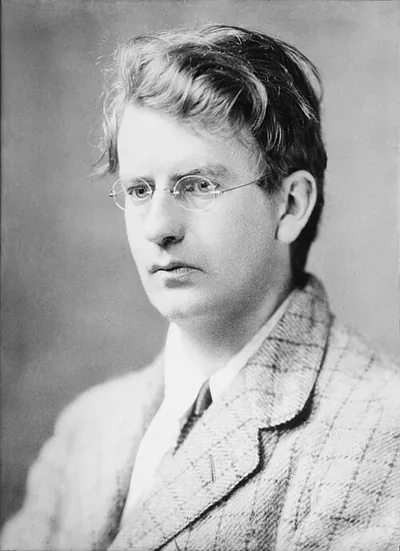 John Logie Baird1888–1946 · Technology and communications
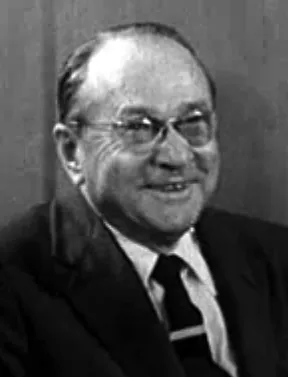 Vladimir K. Zworykin1888–1982 · Technology and communications
 Edwin Howard Armstrong1890–1954 · Technology and communications
 Vannevar Bush1890–1974 · Technology and communications
 Kenjirō Takayanagi1899–1990 · Technology and communications
