
Rasmus Lerdorf
Danish-Canadian computer programmer, creator of the PHP programming language · 1968
- Born
- November 22, 1968
- Country
- Kingdom of Denmark
- Section
- Computing
Biography
Rasmus Lerdorf is a computer programmer born in Greenland, with Danish and Canadian nationality, best known as the creator of PHP, a general-purpose scripting language designed for building web pages. He worked at the time when the web was shifting from static documents to pages that change according to who is viewing them. Over the following decades PHP became one of the most widely used technologies for building websites, and its name appears in countless applications.
Lerdorf was born on 22 November 1968 in Qeqertarsuaq, Greenland. He spent much of his childhood in Denmark, and in 1980 his family moved to Canada, later settling in King City, Ontario, where he finished secondary school in 1988. In 1993 he graduated from the University of Waterloo with a degree in systems design engineering, a discipline that combines computing with the design of complex systems.
Before PHP, Lerdorf took part in open source projects. He contributed to the Apache HTTP Server, the program that answers requests for web pages, and added a LIMIT clause to mSQL, a database management system. The clause, which lets a query return only part of its results, had existed for years in large corporate database systems but had not yet reached the databases built for personal computers. Several other SQL-compatible systems later adopted it.
PHP began as a simple personal tool. In 1994 Lerdorf wanted to know how many people were reading his online résumé. He wrote a small program in Perl, a language widely used for web programming at the time, that displayed the count on the page itself. He called this set of tools PHP, short for Personal Home Page. When other people started asking for it, he shared it and set up a mailing list to gather opinions, suggestions and corrections. That attention led to a position at the University of Toronto, where he built a web system that let students connect to the Internet by dial-up, with time-based account control and all data recorded in a database.
Because no suitable tool existed to link web pages with databases, Lerdorf created a set of tags that could be embedded in the HTML code of pages, which let him replace much of the Perl code. Once the product was mature, although he had built the MySQL interface, other programmers added connections to Oracle and Sybase. The decision to release PHP as free software followed, so that its code could be used, reviewed and improved by a worldwide community. The first version came out in 1995, and the project's growth depended heavily on that collaboration.
From September 2002 to November 2009 he worked for Yahoo! as an infrastructure architecture engineer. He then moved through several companies: in 2010 he joined WePay to develop its application programming interface, the set of rules that lets other programs communicate with a service; in 2012 he announced he was joining Etsy; and in 2013 he became a senior advisor at Jelastic. For a time he also worked as a roving consultant for startups. He is a frequent speaker at open source conferences; at OSCMS 2007 he showed a security flaw in each of the projects represented there, and in 2017 and 2019 he spoke at the WeAreDevelopers conferences about the history of PHP. In 2003 he was named in MIT Technology Review's TR100 list of the world's top innovators under 35.
His legacy lies in how millions of websites work today. He continues to contribute to PHP's development, and his story shows how a tool built for personal use can become shared infrastructure through open collaboration.
Main contributions
- 1994First PHP program: a small Perl script that counted visits to his online résumé.
- 1995Release of the first version of PHP, a language for generating web pages with code embedded in HTML.
- Added the LIMIT clause to the mSQL database system, which restricts how many results a query returns.
- Contributions to the Apache web server, one of the most widely used programs for serving web pages.
Trivia and anecdotes
A name with a double meaning
The initials PHP started as Personal Home Page, but over time the name came to designate a much broader language.
A flaw in every project
In his OSCMS 2007 keynote he presented a security flaw in each of the projects represented at the conference.
Their contemporaries
While Rasmus Lerdorf was alive (1968–)…
Alive at the same time
Discovered or invented in those years
- 1969InternetA global network of interconnected computer networks that communicate using the TCP/IP protocol suite.
- 1971EmailA network service that lets users send and receive digital messages through addressed mailboxes, much like postal mail but electronic.
- 1973Mobile phoneA handheld wireless phone that lets people make and receive calls while moving across a cellular network area.
- 1975Global warmingThe long-term rise in Earth's average surface temperature, driven mainly by greenhouse gases released through human activity.
- 1989World Wide WebA system of linked documents and resources, connected by hyperlinks and accessed over the Internet with web browsers.
- 1990Web browserA program that lets people access the web by fetching a page's files from a server and displaying them on screen as an interactive page.
 Linus Torvalds1969 · Computing
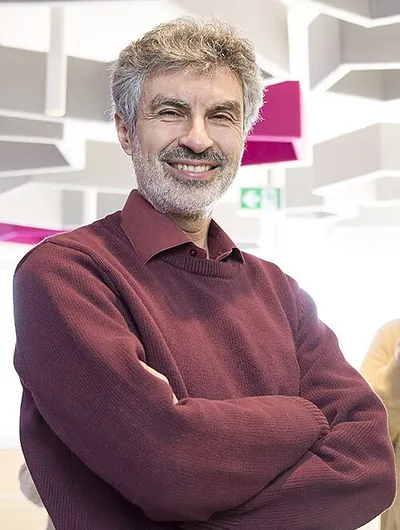 Yoshua Bengio1964 · Computing
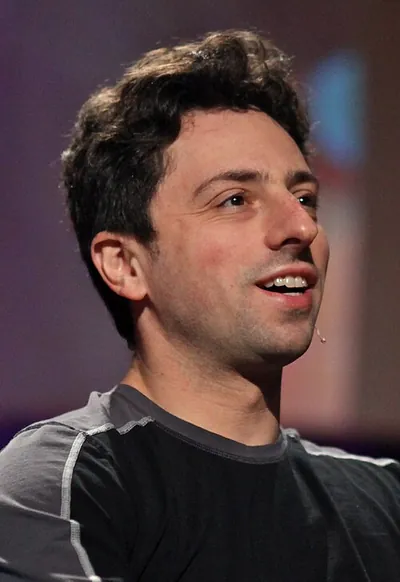 Sergey Brin1973 · Computing
 Andrew Y. Ng1976 · Computing
 Yann LeCun1959 · Computing
 Shafrira Goldwasser1958 · Computing
