
Carl David Anderson
American experimental physicist who discovered the positron and the muon · 1905–1991
- Born
- September 3, 1905
- Died
- January 11, 1991
- Country
- United States
- Section
- Physics
- Awards
- Nobel Prize in Physics
Extended biography
Early life and training
Carl David Anderson was born on September 3, 1905, in New York City. His parents were Swedish immigrants, Emma Adolfina Ajaxson and Carl David Anderson. He grew up in a large American city at a time when science was still a relatively uncommon career path, and his interest in physics developed gradually during his higher education.
He studied at the California Institute of Technology, known as Caltech, which was becoming one of the leading centers of experimental physics in the United States. He earned a Bachelor of Science in Physics and Engineering in 1927 and a Doctor of Philosophy in Physics in 1930, both from the same institution. After his doctorate he became a research fellow there, and his academic career remained tied to Caltech for almost his entire working life.
The sources differ on one point. The English biography states that he was appointed professor of physics in 1933, while the Spanish reference article gives 1939 as the date of his appointment to a chair in the department. The exact date of his promotion is therefore uncertain from these materials. What is clear is that he stayed at the institute until his retirement in 1976.
Cosmic rays and the cloud chamber
Much of Anderson's work focused on cosmic rays, a stream of particles that arrives from space and constantly strikes the Earth's atmosphere. In the 1930s little was known about their nature, and many physicists studied them by measuring how they passed through matter or how they bent in magnetic fields.
To observe them, Anderson used a cloud chamber, a device containing vapour that is kept close to the point where it would condense into droplets. When an electrically charged particle passes through it, it leaves a trail of tiny droplets, so its path is recorded in a photograph. A magnetic field across the chamber bends the tracks, and the direction and amount of bending reveal the particle's electric charge and, with further calculation, its mass.
According to the sources, Anderson worked under the supervision of Robert Millikan, and he also collaborated with him on research into cosmic radiation. This photographic method underlay his two best-known discoveries, and the cloud chamber remained an important tool in particle physics for decades afterwards.
The positron
In 1932, while examining photographs of cosmic-ray tracks, Anderson noticed trails that did not fit what was expected. They had roughly the mass of an electron, yet they curved in the opposite direction, which indicated a positive electric charge. At that time the electron was the only known light particle with a negative charge, and no light particle with the opposite charge had been found.
Anderson concluded that these tracks belonged to a new kind of particle, and he named it the positron. Its charge is equal in size to that of the electron but positive, so it can be thought of as a kind of mirror image of the electron. The Spanish reference article also describes it as a positive electron, with the same charge as a proton but opposite in sign, and with the same mass as the electron.
Paul Dirac had predicted the existence of such a particle a few years earlier, working from his equations describing the behaviour of the electron. Anderson's observations confirmed this theoretical prediction and opened the way to the idea of antimatter, matter built from particles whose charges are the reverse of the ordinary kind. To strengthen his findings, he later produced positrons under controlled conditions. He directed gamma rays, a very energetic form of radiation, into various materials and observed pairs of a positron and an electron appearing together. This showed that energy could be converted into matter, a result of great importance for modern physics. For this work he shared the 1936 Nobel Prize in Physics with Victor Hess.
The muon and Rabi's question
In 1936, Anderson and his first graduate student, Seth Neddermeyer, identified another particle in cosmic rays. For many years it was known as the mu-meson, and today it is called the muon. It carried the same negative charge and the same spin as the electron, a built-in property often described as intrinsic angular momentum, but it was about 207 times more massive. The Spanish reference article dates the discovery to 1938 and calls the particle a meson, while the English biography gives 1936; the difference probably reflects the separate stages of publication and confirmation.
At first, Anderson and Neddermeyer thought they had seen a pion, a particle that Hideki Yukawa had proposed in 1935 to explain the force that holds atomic nuclei together. It soon became clear that the new object was not the pion, because its intermediate mass and behaviour did not match what Yukawa's theory required.
The physicist Isidor Isaac Rabi, faced with a particle that did not fit any known logical scheme, asked with some irony who had ordered it. A popular story says the remark came up during a dinner with colleagues at a Chinese restaurant, but this detail is not documented precisely and should be treated as an anecdote. The muon was the first of a long list of subatomic particles that puzzled theorists, who could not fit them into a tidy order, a situation that led to talk of a particle "zoo". Over time the muon became part of the standard model of particle physics as a heavier version of the electron.
Disputes and recognition
One of the most debated episodes in the history of the positron concerns Chung-Yao Chao, a fellow student of Anderson at Caltech. Fifty years after the discovery, Anderson acknowledged that his work had been inspired by Chao's research, which formed the foundation for much of his own later work. Chao was not credited at the time, and Anderson's late recognition has received attention among historians of science.
The case illustrates a common pattern in the history of discovery. Credit often goes to the person who obtains the decisive proof, while the earlier work of others recedes into the background. This does not question the validity of Anderson's result, which other scientists confirmed, but it shows how recognition was distributed at the time.
In terms of honours, the 1936 Nobel Prize was awarded jointly to Anderson and Hess, and Anderson received other recognitions during his career, although the available sources do not give reliable details of them. Years later, in his 1955 Nobel lecture, Willis Lamb joked about a supposed saying that the finder of a new elementary particle used to be rewarded with a Nobel Prize, but that such a discovery should now be punished with a fine of 10,000 dollars. The remark reflected a feeling that particles were multiplying so fast that they were hard to organize into a clear order.
Personal life and final years
In 1946, Anderson married Lorraine Bergman, and the couple had two sons. The available sources say little about his family life, and what is known comes mainly from his official biography and documents of the period. According to the English biography, he was a Christian. This is part of his personal profile, although there is no documented evidence that it shaped his scientific work.
After retiring in 1976, Anderson remained connected to the academic world. He died on January 11, 1991, in San Marino, California, at the age of 85. His remains were interred at Forest Lawn Memorial Park in Los Angeles.
His later career has been somewhat overshadowed by the fame of his early discoveries. Even so, his role in moving from cosmic-ray observation toward particle physics was significant, because his observations encouraged researchers to work with increasingly powerful detectors and accelerators.
Legacy
Carl David Anderson's scientific legacy rests on two discoveries. The positron showed that antimatter exists and that quantum theory could predict particles before anyone had observed them. Its experimental confirmation was a turning point for twentieth-century physics and provided a foundation for later work on the interactions between particles.
The muon opened a new line of research. Its existence raised the question of why nature needed particles almost identical to the electron but heavier, and that question remains part of current physics. The muon has become a common tool in research, and its study has contributed to the development of the standard model.
Anderson is remembered as an experimentalist who read his own data with care, although he was slow to acknowledge the contributions of others. His story shows how an unexpected observation, interpreted carefully, can change the map of physics, and how scientific recognition does not always immediately reflect who prepared the ground.
Quotes
“The atom can't be seen, yet its existence can be proved. And it is simple to prove that it can't ever be seen. It has to be studied by indirect evidence — and the technical difficulty has been compared to asking a man who has never seen a piano to describe a piano from the sound it would make falling downstairs in the dark.”
“The ideal student would be one who was not working for grades but was working because he was interested in the work and not trying to compete with fellow students.”
Main contributions
- 1932Positron. A particle with the electron's mass and a positive charge, the first antiparticle observed, which confirmed the existence of antimatter.
- 1936Muon. A particle about 207 times as massive as the electron, with the same negative charge, found in cosmic rays.
- 1950V particles. Evidence for charged and neutral particles that left V-shaped tracks in detectors.
Teachers and students
Trivia and anecdotes
«Who ordered that?»
Faced with the muon, I. I. Rabi asked this question. The remark is said to have come during a dinner at a Chinese restaurant, though that detail is anecdotal and unconfirmed.
A fine instead of a prize
In his 1955 Nobel lecture, Willis Lamb joked that the discoverer of a new particle should pay a 10,000-dollar fine instead of receiving a prize.
Related discoveries and inventions
- 1932PositronA particle with the same mass as the electron but a positive electric charge; it is the electron's antiparticle.
- 1937MuonAn elementary particle resembling the electron but about 207 times heavier, belonging to the second generation of leptons.
Their contemporaries
While Carl David Anderson was alive (1905–1991)…
Alive at the same time
Discovered or invented in those years
- 1916Black holeA region of space where gravity is so strong that nothing, not even light, can escape once it crosses a certain boundary.
- 1925TelevisionA system that sends moving pictures and sound over distance and shows them on a receiver, the television set.
- 1925Quantum mechanicsPhysical theory describing how matter and light behave at atomic and subatomic scales, where energy is exchanged in minimal packets and results are expressed as probabilities.
- 1931Big BangA cosmological model describing how the universe expanded from an early state of extreme density and temperature, about 13.8 billion years ago.
- 1945ComputerA programmable machine that takes in data, processes it by following stored instructions, and produces results, able to switch tasks simply by running different software.
- 1969InternetA global network of interconnected computer networks that communicate using the TCP/IP protocol suite.
 J. Robert Oppenheimer1904–1967 · Physics
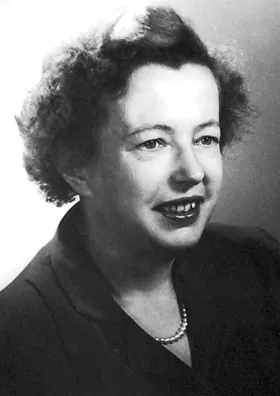 Maria Göppert Mayer1906–1972 · Physics
 Hans Bethe1906–2005 · Physics
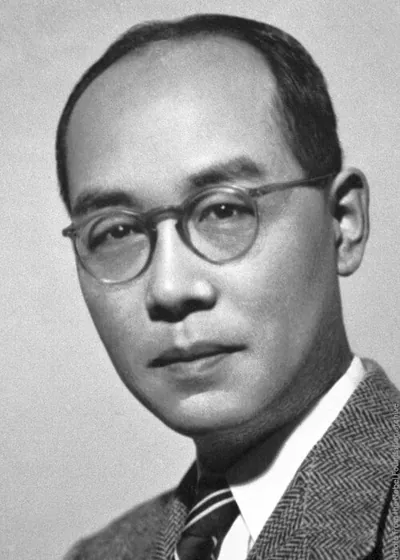 Hideki Yukawa1907–1981 · Physics
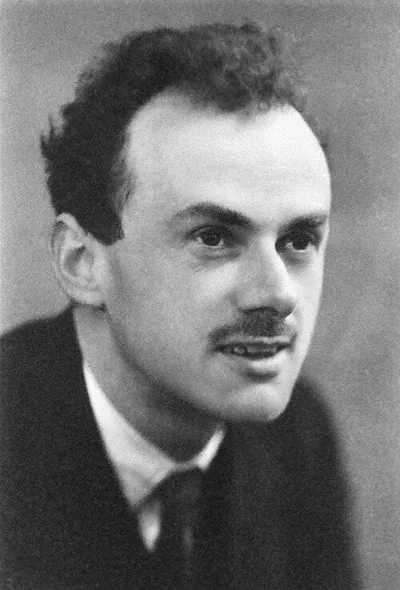 Paul Dirac1902–1984 · Physics
 Lev Landau1908–1968 · Physics
