W. D. Hamilton
British evolutionary biologist, author of Hamilton's rule on kin selection · 1936–2000
- Born
- August 1, 1936
- Died
- March 7, 2000
- Country
- United Kingdom
- Section
- Biology
Biography
William Donald Hamilton (Cairo, 1936 - London, 2000) was a British evolutionary biologist and one of the most significant evolutionary theorists of the twentieth century. He explained with mathematical rigour why an organism may favour its relatives even at a cost to itself, and this insight was a key part of the gene-centred view of evolution. He is considered one of the forerunners of sociobiology.
Hamilton was born in Cairo in 1936, the second of seven children, to a family of New Zealand origin. His father was an engineer and his mother a physician. Two of his sisters qualified in medicine, and another became a pasture scientist. The family settled in Kent, and during the Second World War he was evacuated to Edinburgh. From an early age he collected butterflies and other insects. In 1946 he came across a book on butterflies by E. B. Ford, from the New Naturalist series, which introduced him to natural selection, genetics and population genetics, the study of how gene frequencies change within groups. He was educated at Tonbridge School. At the age of twelve he was seriously injured while playing with explosives left over from his father's wartime work making hand grenades. He needed an operation on his chest and lost parts of several fingers on his right hand. After national service he went to St John's College, Cambridge, where he was at first unimpressed by biologists who, in his account, hardly seemed to believe in evolution.
He enrolled in a master's course in demography at the London School of Economics, and his work became increasingly mathematical and genetical. His supervision passed to John Hajnal at the LSE and Cedric Smith at University College London. Ronald Fisher and J. B. S. Haldane had glimpsed the problem of how an organism can pass on its genes by helping close relatives, but had not fully formulated it. Hamilton worked through several examples and noticed that a number kept appearing in his calculations: Sewall Wright's coefficient of relationship, the proportion of genes two individuals share through common descent. From this came his rule. A costly act is favoured by natural selection when the benefit to the recipient, multiplied by the genetic relatedness between the two, exceeds the cost to the actor. Relatedness is expressed as a number between 0 and 1.
Hamilton published his ideas in 1964 in two papers in the Journal of Theoretical Biology. The proofs were mathematically dense, and two referees passed the work over. The third, John Maynard Smith, did not fully grasp it but recognised its importance. Hamilton later believed that Maynard Smith had held back his work in order to claim the idea, while Maynard Smith had meanwhile published a paper that briefly mentioned similar ideas. At first the paper was largely ignored, but over time it became a routine citation in biology textbooks. Much of the discussion concerned the social life of ants, bees and wasps. In these insects, females share more genes with their sisters than they would with their own offspring, and Hamilton suggested that helping to raise sisters could pay better than reproducing directly.
Between 1964 and 1977 he was a lecturer at Imperial College London. In 1960, while helping A. W. F. Edwards, a pupil of Fisher, test Fisher's account of sex ratios, Hamilton had found an explanation for the unusual sex ratios seen in some wasps. He published this in Science in 1967. The paper introduced the idea of an unbeatable strategy, which John Maynard Smith and George Price developed into the evolutionarily stable strategy, a concept from game theory that is now used well beyond biology. In 1970 he published a study of spite, meaning harm inflicted on others with no benefit to oneself. He explained it as a way of increasing the chance that one's own genes are passed on, by harming individuals who are less closely related, and he thought spite was unlikely to become an elaborate adaptation.
After a spell as a visiting professor at Harvard and several months on a scientific expedition in Brazil, he moved to the University of Michigan in 1978. His arrival sparked protests by students who objected to his association with sociobiology. There he worked with the political scientist Robert Axelrod on the prisoner's dilemma, and in 1981 they published together on the evolution of cooperation. Hamilton was regarded as a weak lecturer, but his ideas reached a wide audience through Richard Dawkins's The Selfish Gene, published in 1976. He also championed the Red Queen theory of sex, a separate idea from one proposed earlier by Leigh Van Valen, named after a character in Lewis Carroll who must keep running just to stay in place. The theory holds that sex constantly reshuffles genes, so that parasites find it harder to keep up. He was elected a Fellow of the Royal Society in 1980, and in 1984 he became Royal Society Research Professor in Oxford, remaining there until his death as a fellow of New College.
In the 1990s he took an interest in a hypothesis now regarded as discredited: that HIV originated in the oral polio vaccine trials that Hilary Koprowski ran in Africa in the 1950s. His letter on the subject was rejected by Science in 1996, but he wrote the foreword to Edward Hooper's 1999 book The River. In 2000 he travelled to the Democratic Republic of the Congo to study simian immunodeficiency virus in primates. He returned to London on 29 January, was admitted to hospital, and died at the Middlesex Hospital on 7 March 2000. The official inquest found that he died of multi-organ failure caused by bleeding from the upper gastrointestinal tract. The BBC's investigation confirmed that he had contracted malaria on his final African trip, but the link between the malaria and the cause of death was indirect. He was an agnostic, and a secular memorial service organised by Richard Dawkins was held at the chapel of New College in July 2000. He was buried near Wytham Woods.
In 1966 he married Christine Friess, and they had three daughters. They separated amicably twenty-six years later. From 1994 his companion was Maria Luisa Bozzi, an Italian science journalist and author. His legacy rests above all on his rule, which remains central to the study of social behaviour. His collected papers appeared in three volumes between 1996 and 2005. Alan Grafen wrote a biographical memoir for the Royal Society, and Ullica Segerstråle published a full biography in 2013. Richard Dawkins described Hamilton as the greatest Darwinian of his lifetime.
Main contributions
- 1964Hamilton's rule: a costly behaviour can spread if it benefits closely related individuals enough.
- 1967Extraordinary sex ratios: an explanation of why some wasps produce sex ratios far from 1:1, introducing the idea of an unbeatable strategy.
- 1970Spiteful behaviour: a model explaining deliberate harm to others with no benefit to oneself as a way of increasing the spread of one's own genes.
- 1971Geometry for the selfish herd: a model showing how animals in groups position themselves to reduce their own risk of being caught by a predator.
- 1981Evolution of cooperation: a study, with Robert Axelrod, of how cooperation can emerge among self-interested individuals who interact repeatedly.
- 1982Heritable true fitness and bright birds: the proposal that bright plumage can signal resistance to parasites.
- 1987Theoretical clarification of the green-beard effect, by which a gene can favour others who carry identical copies of itself.
- 1996First volume of his collected papers, Narrow Roads of Gene Land, devoted to the evolution of social behaviour.
Teachers and students
Studied under:
Taught:
Trivia and anecdotes
A childhood injury
At twelve, Hamilton was badly hurt while handling explosives left over from the war at his family home. He needed emergency surgery to save his life.
A queen who runs in place
The Red Queen theory takes its name from a passage in Lewis Carroll's Through the Looking-Glass, in which the Queen explains that you must keep running just to stay where you are.
A tribute from Dawkins
Richard Dawkins wrote that Hamilton was the greatest Darwinian of his lifetime. Dawkins also organised the secular memorial service held in Oxford after his death.
Their contemporaries
While W. D. Hamilton was alive (1936–2000)…
Alive at the same time
Discovered or invented in those years
- 1945ComputerA programmable machine that takes in data, processes it by following stored instructions, and produces results, able to switch tasks simply by running different software.
- 1957Artificial satelliteAn artificial satellite is a human-made object placed in orbit around a celestial body, usually Earth, to collect information, relay signals, or carry out a specific task.
- 1969InternetA global network of interconnected computer networks that communicate using the TCP/IP protocol suite.
- 1971EmailA network service that lets users send and receive digital messages through addressed mailboxes, much like postal mail but electronic.
- 1973Mobile phoneA handheld wireless phone that lets people make and receive calls while moving across a cellular network area.
- 1989World Wide WebA system of linked documents and resources, connected by hyperlinks and accessed over the Internet with web browsers.
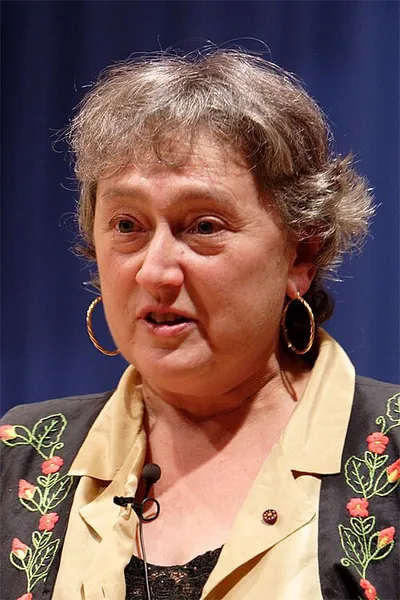 Lynn Margulis1938–2011 · Biology
 Ada Yonath1939–2026 · Biology
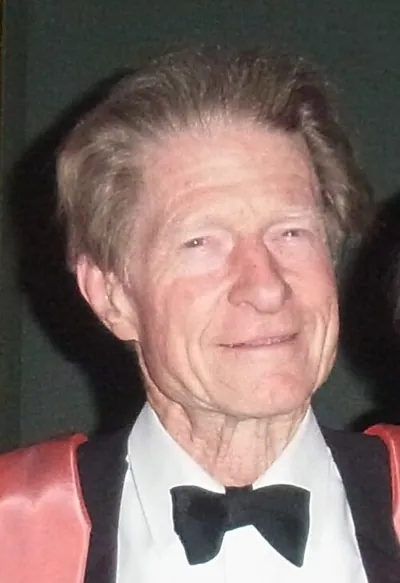 John Gurdon1933–2025 · Biology
 Stephen Jay Gould1941–2002 · Biology
 Christiane Nüsslein-Volhard1942 · Biology
 Edward O. Wilson1929–2021 · Biology