Yvette Cauchois
French physicist specialising in X-ray spectroscopy and a pioneer of synchrotron research in Europe · 1908–1999
- Born
- December 19, 1908
- Died
- November 19, 1999
- Country
- France
- Section
- Physics
Biography
Yvette Cauchois (Paris, 1908–1999) was a French physicist who devoted much of her career to X-rays, the radiation that passes through matter and reveals its internal structure. Her work spans much of the twentieth century, and her name is tied to X-ray spectroscopy, which analyses the radiation that matter emits or absorbs in order to determine its composition, as well as to the early use of synchrotron radiation in Europe.
She was educated in Paris and gained her degree in physical sciences from the Sorbonne in July 1928. She then undertook graduate work at the Laboratory of Physical Chemistry, supported by a National Fund for Science studentship, and completed her doctorate in 1933 with a thesis on using curved crystals for high-resolution X-ray analysis. A curved crystal can focus X-rays in a way loosely similar to a lens, allowing their wavelengths to be separated with precision.
After her doctorate she became a research assistant in the laboratory of Jean Perrin at the French National Centre for Scientific Research. In 1938 she was appointed head of the Physical Chemistry Laboratory at the University of Paris. During the war she kept the laboratory running while Perrin fled to the United States. In 1945 she became a professor at the Sorbonne, and in 1954 she took over the chair of Chemical Physics. In 1960 she founded the Centre de Chimie Physique at Orsay, which she directed for ten years while continuing her teaching at the Sorbonne.
Her best-known contribution was a new X-ray spectrometer that was easy to use, offered high resolution and met the Bragg condition, the rule describing how X-rays reflect off the planes of a crystal. From 1934 she used it to study gas emissions and multiplets, which are groups of closely spaced spectral lines. She also systematically studied the X-ray spectra of heavy elements and actinides. In 1936 she and Horia Hulubei claimed to have discovered element 85 through X-ray analysis, a claim they followed up in later publications. Later, with other colleagues, she helped identify polonium and neptunium, and turned to the transuranic elements. Her interest in astrophysics led her to study solar X-rays using rocket experiments and, in 1970, to produce X-ray images of the Sun.
From 1962 she launched, in collaboration with Italian institutions, a programme to explore synchrotron research, using a machine that generates intense radiation by steering electrons around a ring. She was the first person in Europe to recognise how useful this radiation could be for understanding the properties of matter. In the early 1970s she carried out experiments at LURE in Orsay.
Outside the laboratory she was keen on helping young and disadvantaged people, and she played the piano. In 1999, after talking with a priest from the monastery of Bârsana in Romania, she was baptised into the Orthodox Church. She caught bronchitis on that trip and died a few days after returning to Paris. Her legacy lives on in X-ray spectroscopy and in more than two hundred publications that are still cited.
Main contributions
- 1933Doctoral thesis on using curved crystals for high-resolution X-ray analysis.
- 1934A high-resolution, easy-to-use X-ray spectrometer named after her, which she began using to study gas emissions.
- 1936Claim, with Horia Hulubei, to have discovered element 85 through X-ray analysis.
- 1948Book Les spectres de rayons X et la structure électronique de la matière, an advanced physics text on X-ray spectra.
- 1962Start of a European programme to investigate the synchrotron as a source of radiation for studying matter.
- 1970X-ray images of the Sun, produced as part of her astrophysics studies.
Teachers and students
Trivia and anecdotes
Second woman to lead the French Society of Physical Chemistry
She chaired the society from 1975 to 1978, becoming only the second woman to do so after Marie Curie.
A legacy for a monastery
She is buried at the monastery of Bârsana, to which she bequeathed her possessions.
Their contemporaries
While Yvette Cauchois was alive (1908–1999)…
Alive at the same time
Discovered or invented in those years
- 1916Black holeA region of space where gravity is so strong that nothing, not even light, can escape once it crosses a certain boundary.
- 1925TelevisionA system that sends moving pictures and sound over distance and shows them on a receiver, the television set.
- 1925Quantum mechanicsPhysical theory describing how matter and light behave at atomic and subatomic scales, where energy is exchanged in minimal packets and results are expressed as probabilities.
- 1931Big BangA cosmological model describing how the universe expanded from an early state of extreme density and temperature, about 13.8 billion years ago.
- 1945ComputerA programmable machine that takes in data, processes it by following stored instructions, and produces results, able to switch tasks simply by running different software.
- 1969InternetA global network of interconnected computer networks that communicate using the TCP/IP protocol suite.
 Lev Landau1908–1968 · Physics
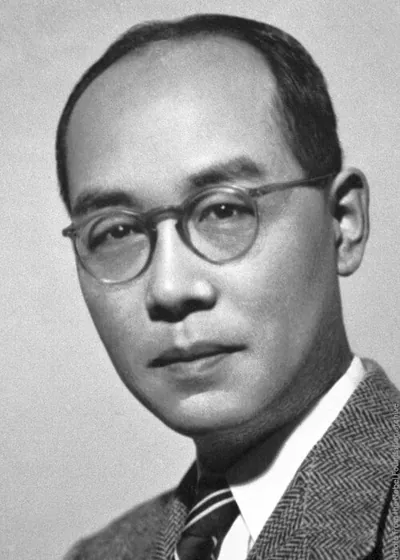 Hideki Yukawa1907–1981 · Physics
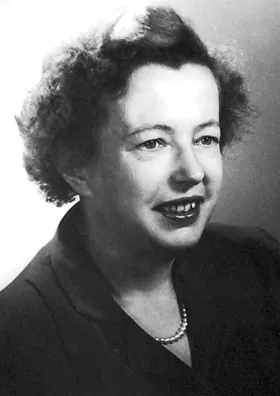 Maria Göppert Mayer1906–1972 · Physics
 Hans Bethe1906–2005 · Physics
 J. Robert Oppenheimer1904–1967 · Physics
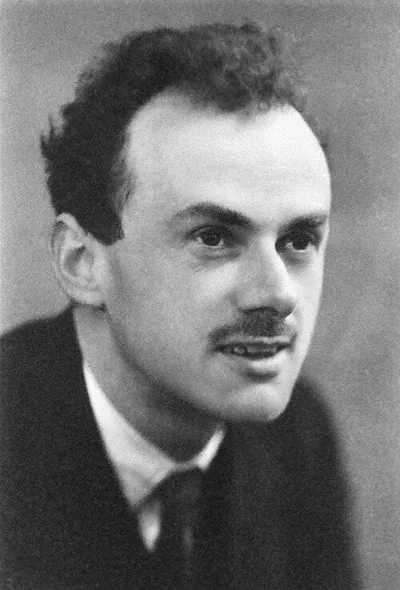 Paul Dirac1902–1984 · Physics