
Edward Victor Appleton
English physicist, Nobel Prize in Physics in 1947 for his studies of the ionosphere, which led to the development of radar · 1892–1965
- Born
- September 6, 1892
- Died
- April 21, 1965
- Country
- United Kingdom
- Section
- Physics
- Awards
- Nobel Prize in Physics
Extended biography
Childhood and training
Edward Victor Appleton was born on 6 September 1892 in Bradford, an industrial city in the north of England, in the county of Yorkshire. He was the eldest child of Peter Appleton, who worked as a clerk in a warehouse, and Mary Wilcock. He had two younger sisters, Isabel and Dorothy. He was named Edward after the tenor Edward Lloyd, but he preferred to use his middle name, and in his family he was always known as Vic.
His schooling was strong. He attended Barkerend Primary School and, at the age of eleven, won a scholarship to Hanson Boys' Grammar School, where he captained both the cricket and football teams. Later he won a city scholarship to Bradford Grammar School but did not take it up. After passing the London Matriculation Examination, he won the Isaac Holden Scholarship in 1910, which would take him to the University of Cambridge. The university would not admit students until they were nineteen, so he had to wait another year.
In 1911 he entered St John's College, Cambridge, where he took a Bachelor of Arts in Natural Science in 1913 and a Master of Arts in Physics in 1914. That year he received a research studentship that allowed him to work under J. J. Thomson and Ernest Rutherford, two of the most influential physicists of the age. As a student he met Oliver Lodge and Guglielmo Marconi, two pioneers of radio. During the long vacations he helped Lawrence Bragg study the internal structure of metals with X-rays, a technique that reveals how atoms are arranged by measuring how the rays scatter when they pass through a crystal.
The First World War and military radio
When the First World War broke out in August 1914, Appleton was already part of the university's officer training corps. He applied for a commission in the Royal Engineers, but growing tired of waiting, he enlisted as a private in the 16th Battalion of the West Yorkshire Regiment, known as the 1st Bradford Pals, and was soon promoted to corporal. His commission finally came through in January 1915, when he became a second lieutenant in the Royal Engineers. It marked the start of a different kind of work: a young physicist facing practical problems in military communication.
After engineer training at Aldershot, he was sent to Malvern for the first general radio course for officers, taught by Captain C. F. Trippe, who later played a significant role in the industrial development of the thermionic valve. Appleton topped the course examination and was asked to run the second course when Trippe fell ill. He was then posted to the Royal Engineers Signals Depot at Fenny Stratford, where he stayed for the rest of the war. In May 1915 he had married Jessie Longson, a distant cousin who worked as a textile designer and was the daughter of a Baptist minister. They had two daughters, Margery, born in 1920, and Rosalind, born in 1927.
One wartime episode shows the kind of problem he faced. In 1915 the British Army discovered that German artillery seemed to know the movements of its ration parties. After the French captured a German device, Appleton, together with Captains Algernon Fuller and Edward Stevens, found that it was an amplifier able to listen in on army field telephones connected to the ground. The obvious remedy, twisted pair cabling, was expensive. Fuller then devised the fullerphone, which worked on the existing telephone lines but was much harder to tap. In December 1917 Appleton went to the Western Front for a fortnight to demonstrate radio and tested the new device in the field, finding that it worked with as little as a millionth of an ampere of current. He brought back a captured German thermionic valve, a vacuum tube that controls the flow of electric current, and became fascinated by it, so he studied it in depth on his return to Cambridge. He left the army in January 1919.
Cambridge, London and early radio studies
Back in Cambridge he was elected a fellow of St John's College and in 1920 joined the Cavendish Laboratory as an assistant demonstrator in physics. Under Rutherford the laboratory was moving deeper into nuclear physics, but Appleton's interest lay in radio: how valves generated waves, how those waves travelled, and why their reception fluctuated in puzzling ways. He was initiated into Freemasonry in 1922, a detail recorded as part of his social life of the period.
In his work on the valve he collaborated with Balthasar van der Pol, a Dutch scientist who had been a research student at the Cavendish before the war. Van der Pol considered returning, but Appleton warned him that academic posts paid poorly, and he chose to join Philips instead. The two men wrote the textbook Thermionic Vacuum Tubes, published in 1932, which became a standard reference on the subject.
His atmospheric research depended largely on the Radio Research Board, of which he was a member from 1926 until 1939. The board funded his experiments, and its Radio Research Station at Ditton Park, near Slough, worked with the Cavendish on atmospheric studies. Appleton also set up a field station near Peterborough, where his student Miles Barnett carried out measurements under his direction. The station later moved to Hampstead, in 1932.
In October 1924 he was appointed Wheatstone Professor of Physics at King's College London, and in 1927 he was elected a fellow of the Royal Society, Britain's oldest scientific academy. These years built his reputation as one of the researchers who best understood how radio waves behaved in the atmosphere. In 1936 he returned to Cambridge as Jacksonian Professor of Natural Philosophy, and when Rutherford died that October he became acting director of the Cavendish Laboratory. He had hoped to succeed Rutherford, but the directorship went to Lawrence Bragg.
The experiment that revealed the ionosphere
For years it had been noticed that medium-wave radio signals behaved differently by day and by night. During the day their strength stayed fairly steady, while at night it varied irregularly. To understand this, it helps to know that radio waves can travel along two routes: one hugging the ground, and another that climbs upward and bounces off layers high in the atmosphere. If both arrive at the receiver slightly out of step, they reinforce or cancel each other, much as ripples on water overlap. This effect is called interference, and it explains the changes in strength.
The idea of a reflecting layer was not entirely new. In the late nineteenth century Balfour Stewart had proposed one to explain rhythmic changes in the Earth's magnetism, and in 1902 Oliver Heaviside and Arthur E. Kennelly independently suggested a conducting layer that might explain how Marconi's signals crossed the Atlantic. Calculations showed that the simple bending of radio waves by the air was not enough to bring them back to the ground. Something had to send them back, but no direct proof existed.
Appleton judged that the best place to look for evidence was the change that happened each evening at sunset, when reception shifted. He designed an experiment with two methods. The first relied on frequency modulation: by slowly changing the wavelength of a transmitter and noting the points where the signal peaked and faded, the difference in path length between the direct and reflected waves could be worked out, and from it the height of the layer. The second method measured the angle at which the reflected signal arrived at the receiving aerial. Both could estimate the height of the lower edge of the reflecting region.
In 1924 he carried out the experiment with his student Miles Barnett. They used the BBC transmitter at Bournemouth, which altered its wavelengths after the evening programmes had ended, and a receiving station in Oxford, since no suitable transmitter lay at the right distance from Cambridge at that time. Their first estimate put the height of the reflecting layer at about 96.6 kilometres. The experiment confirmed that a reflecting layer existed far above the Earth, but it raised many new questions: what the layer was made of, how it reflected waves, whether it was the same everywhere, and why it changed so much between day and night.
The theory of the ionosphere and radar
To answer those questions Appleton developed a magneto-ionic theory, building on earlier work by Lorentz and Maxwell, that described how the Earth's magnetic field and the free electrons in the upper atmosphere affected radio waves. An ion is an atom or molecule that has lost or gained electrons and so carries an electric charge. When sunlight strips electrons from the gases of the high atmosphere, that region becomes electrically conducting. Through experiments and calculations he showed that the Kennelly-Heaviside layer was heavily ionised, which is where the name ionosphere came from. He also identified free electrons as the agents of this ionisation.
His work showed that the ionosphere was more complicated than had been assumed. He found that waves above a certain frequency passed through the layer, and that this critical frequency could be used to calculate the density of electrons. Waves that got through were reflected back from a much higher region. The lower region was named the E layer, which reflected longer waves and sat roughly a hundred kilometres up. The upper region, the F layer, had a much higher electron density and reflected shorter waves that penetrated the E layer. It is the F layer, often called the Appleton layer, that makes most long-distance shortwave communication possible.
The theory also explained the fading signals heard at sunset. During the day sunlight ionises the air even at low altitudes, where there is plenty of gas and therefore many electrons. The signal is then almost completely absorbed and never reflects back. At sunset the ions slowly recombine with electrons, absorption falls, and reflected waves become strong enough to be heard. Appleton found that the height of reflection rose after sunset and fell again at dawn, consistent with the idea that ionisation depends on solar radiation. Recombination, in other words, moves gradually from the lower layers upward.
His research also had a decisive military use. Measuring the distance to objects that reflect radio signals led to a new technique he developed, the pulse method, which sent short bursts of radio energy and timed their return. The method, shown as moving dots on a cathode ray tube screen, became the basis of radar. Robert Watson-Watt later adapted it to detect aircraft, and historians regard it as one of the key wartime innovations.
War, the DSIR and the atomic projects
In October 1938 Appleton became Secretary of the Department of Scientific and Industrial Research, known as the DSIR, a post he held until 1949. The role made him responsible for coordinating much of British science. In February 1939 he moved with his family to Putney in London, and soon after the Second World War began in September he brought his Cambridge colleague Piggott in as his assistant. The department's task was to direct the national laboratories towards wartime needs, arranging the country's scientific knowledge in support of the war effort.
The laboratories contributed in very different ways. The National Physical Laboratory's ship tank was used to develop landing craft, the Mulberry harbours and the bouncing bomb. The Forest Products Research Laboratory developed plywood and adhesives for aircraft, the Fuel Research Station designed fuels for flamethrowers, and another laboratory created a device that let airmen turn sea water into drinking water. Appleton was closely involved in developing radar, and his earlier ionosphere research also found a use in high-frequency direction finding, the technique for locating the source of a radio signal.
The war affected his family life. His home in Putney was damaged in the bombing of September 1940, and the family moved to a hotel in Teddington, near the department's headquarters and the National Physical Laboratory, which was also a German target. They spent nights in the hotel's air raid shelter. In 1942 the laboratory's director, Charles Galton Darwin, was seconded to the British mission in Washington, and Appleton took over as acting director, with the family moving into Bushy House. His services were recognised with a knighthood, the Knight Commander of the Order of the Bath, an honour customarily given to the Secretary of the DSIR.
In September 1941 he took on a further responsibility: the directorate of Tube Alloys, the British nuclear weapons programme, which had been set up within the DSIR. The name was chosen deliberately to reveal nothing. The day-to-day director was Wallace Akers of Imperial Chemical Industries. In 1943 the Quebec Agreement merged Tube Alloys with the American Manhattan Project. Because the Americans regarded Akers as too commercial for the role of British representative, Appleton went to Washington to negotiate. He backed James Chadwick as head of the British team on the project, and in April 1945 he recommended John Cockcroft to set up an atomic research establishment in Britain, laying the ground for the postwar programme. By the end of the war he had also turned the DSIR towards reconstruction, convinced that science and industry had to work together to repair services and infrastructure damaged by the conflict.
The Nobel Prize and the University of Edinburgh
In 1946 he was made a Knight Grand Cross of the Order of the British Empire, and he received foreign honours from the United States, France, Norway and Iceland. The most important recognition came in 1947, when the Royal Swedish Academy of Sciences awarded him the Nobel Prize in Physics for his investigations of the physics of the upper atmosphere, especially for the discovery of the so-called Appleton layer. The prize recognised the whole body of his work on the ionosphere, which had a large influence on communications and on the development of radar.
In October 1948 the Lord Provost of Edinburgh, Sir Andrew Murray, invited him to become Principal and Vice-Chancellor of the university, a post that had been vacant since the death of Sir John Fraser in December 1947. Appleton and his wife were hesitant because the official residence, Abden House, was in poor condition, but the council agreed to renovate it, and he took up the post in May 1949. The university grew considerably during his tenure. In 1939 it had 185 full-time staff and 3,716 students, and twenty years later it had 612 full-time staff and 7,004 students.
Growth required space. A master plan called for turning George Square, a historic district that had fallen badly into decline, into a university precinct. The first step, an extension of the existing medical buildings, was approved by the city council in February 1949, shortly before he arrived. It meant demolishing much of the area's old housing and putting up modern buildings, including 40 George Square, the university library and the tower that now bears his name. The project was highly controversial and fiercely contested. Appleton answered many of the people who wrote to him with personal letters rather than form replies, and he lived to see the work completed.
His legacy in this period is contested. A recent study describes him as megalomaniacal in his determination to push these plans through. Separately, the Comprehensive Development Area scheme, in which the university took part from 1960 and which would have demolished about 51 hectares of historic southern Edinburgh, led to the loss of many homes and businesses. The scheme, led by the university, blighted the area for a decade before being abandoned in the mid-1970s. These decisions were made under heavy pressure from university expansion, and they should be judged with that context in mind.
Later years and legacy
Appleton never gave up his interest in the physics of the ionosphere. In 1950 he founded the Journal of Atmospheric and Terrestrial Physics and remained its editor-in-chief until his death. He was president of the International Union of Scientific Radio from 1934 to 1952 and attended its general assemblies in Zurich, Sydney, The Hague and Boulder, Colorado. On his 1952 trip to Australia he gave talks in Sydney, Canberra and Adelaide. In 1954 he noticed that values for the F2 layer differed between Delhi and Baton Rouge, two cities at similar latitudes, and concluded that position relative to the magnetic equator, as well as to the geographic one, mattered more than latitude alone.
In 1956 the BBC invited him to give the annual Reith Lectures. Under the title Science and the Nation, he devoted a series of six radio broadcasts to the many facets of scientific activity in Britain at the time. The philosopher George Elder Davie later claimed that Appleton had rebuked him over the implied criticism of academic specialisation in his book The Democratic Intellect, published in 1961, which defended Scotland's generalist intellectual tradition. The claim comes from Davie himself and is best treated as his account.
His personal life brought losses. His first wife, Jessie, suffered a severe stroke in 1961 and died in 1964. In March 1965 Appleton married Helen, who had been his private secretary since 1952. He died of a sudden heart attack on 21 April 1965 at Abden House in Edinburgh and was buried in Morningside Cemetery, where Helen was later also laid. His papers are held by the University of Edinburgh, and the University of Cambridge holds his correspondence with J. A. Ratcliffe.
His name remains in many places. In 1973 the Radio Research Station was renamed the Appleton Laboratory, and in 1979 it merged with the Rutherford Laboratory to form the Rutherford Appleton Laboratory. In 2008 the Institute of Physics' Chree Medal and Prize was renamed the Edward Appleton Medal and Prize. He is also commemorated by the Appleton Tower at the University of Edinburgh, the Appleton crater on the Moon, and the Appleton Academy in Bradford. The term Appleton layer is still used for the upper F layer. His work showed that the high atmosphere shapes long-distance communication, and that basic research can become essential technology.
Main contributions
- 1924Demonstration of a reflecting layer in the upper atmosphere, with Miles Barnett, using the BBC transmitter at Bournemouth and receivers in Oxford.
- 1927Election to the Royal Society, following his work on radio wave propagation.
- 1932Publication, with Balthasar van der Pol, of the textbook Thermionic Vacuum Tubes on thermionic valves.
- 1933Hughes Medal of the Royal Society for his research on the Heaviside layer.
- 1947Nobel Prize in Physics for his contributions to knowledge of the ionosphere, which led to the development of radar.
- Pulse method for measuring the ionosphere, a basis for later radio detection techniques.
Teachers and students
Studied under:
Taught:
Trivia and anecdotes
A German valve
According to his own account, he brought back from the Western Front a captured German thermionic valve, which fascinated him and which he studied on returning to Cambridge.
A name with history
He was named Edward after the tenor Edward Lloyd, but he preferred his middle name, Victor, and his family always called him 'Vic'.
Their contemporaries
While Edward Victor Appleton was alive (1892–1965)…
Alive at the same time
Discovered or invented in those years
- 1897ElectronA negatively charged subatomic particle found in every atom, and key to electricity and chemical bonding.
- 1903AirplaneA fixed-wing aircraft, heavier than air, powered by engines or rockets, that stays aloft because its wings generate lift.
- 1925TelevisionA system that sends moving pictures and sound over distance and shows them on a receiver, the television set.
- 1925Quantum mechanicsPhysical theory describing how matter and light behave at atomic and subatomic scales, where energy is exchanged in minimal packets and results are expressed as probabilities.
- 1931Big BangA cosmological model describing how the universe expanded from an early state of extreme density and temperature, about 13.8 billion years ago.
- 1945ComputerA programmable machine that takes in data, processes it by following stored instructions, and produces results, able to switch tasks simply by running different software.
 Louis de Broglie1892–1987 · Physics
 James Chadwick1891–1974 · Physics
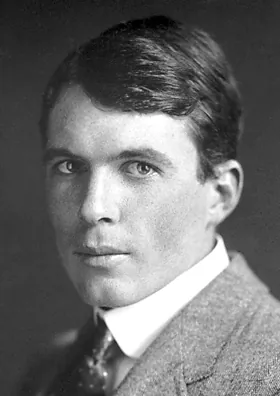 William Lawrence Bragg1890–1971 · Physics
 Pyotr Kapitsa1894–1984 · Physics
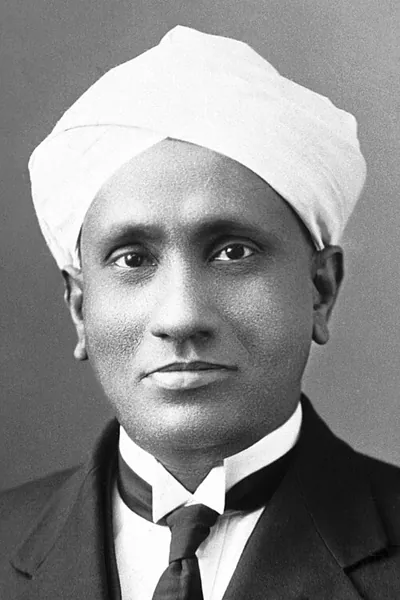 Chandrasekhara Venkata Raman1888–1970 · Physics
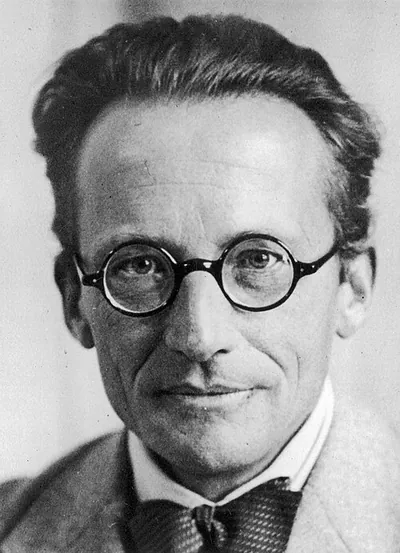 Erwin Schrödinger1887–1961 · Physics
