Ernst Stueckelberg
Swiss physicist and mathematician, a pioneer of elementary particle theory and the renormalization group · 1905–1984
- Born
- February 1, 1905
- Died
- September 4, 1984
- Country
- Switzerland
- Section
- Physics
Biography
Ernst Stueckelberg (Basel, 1905 - 1984) was a Swiss physicist and mathematician regarded as one of the most eminent physicists of the twentieth century. His ideas on the forces between particles, on renormalization and on relativistic dynamics anticipated developments that other scientists later received with far more recognition. He matters because he tackled central problems of quantum physics at a time when the theory of elementary particles was only beginning to take shape.
He was born in Basel into a semi-aristocratic family. His father was a lawyer, and his paternal grandfather, also named Ernst Stückelberg, was a well-known Swiss artist. A gifted schoolboy, he began a physics degree at the University of Basel in 1923. While still a student, he was invited by the leading quantum theorist Arnold Sommerfeld to attend his lectures at the University of Munich. There he earned his doctorate in 1927 with a thesis on cathode physics, the study of the electrons emitted from the negative electrode in discharge tubes.
Later that same year he moved to Princeton University, where he became an assistant professor in 1930. He was elected a Fellow of the American Physical Society in 1931. He returned to Switzerland in 1932, worked first at Basel and the following year moved to the University of Zurich. In 1934 he settled at the University of Geneva, which, together with the University of Lausanne, became his main base for the rest of his career.
His time in Zurich brought him into contact with Wolfgang Pauli and Gregor Wentzel, and steered him toward the emerging theory of elementary particles. In 1934 he devised a perturbation method for quantum fields that kept the same mathematical form in every frame of reference. It was powerful, but his contemporaries did not adopt it, and it was largely forgotten. It also had the advantage of avoiding so-called vacuum bubbles, meaningless terms that appear in some other calculations.
In 1935 he proposed that the strong nuclear force could be explained by the exchange of vector particles. Discussions with Pauli led him to drop the idea, and the Japanese physicist Hideki Yukawa developed a similar theory independently, earning the Nobel Prize in Physics in 1949. Stueckelberg is often cited as a contributor to several Nobel-winning advances who went unacknowledged. In 1938 he noticed that massive electrodynamics contains a hidden scalar field and formulated a version of what later became known as the Abelian Higgs mechanism, the process by which particles acquire mass. That same year he proposed the conservation of baryon number, a quantity that counts baryons minus antibaryons and stays constant in reactions.
In 1941 he proposed that the positron, the antiparticle of the electron, could be understood as a positive-energy electron travelling backward in time. That year and in 1942 he presented an evolution parameter theory that today underpins recent work in relativistic dynamics. In 1943 he proposed a renormalization programme to handle the infinite values that appeared in quantum electrodynamics, a technique for removing those infinities from calculations. His paper was rejected by Physical Review. In 1952 he proved the principle of semi-detailed balance for kinetics, which describes how systems evolve without microscopic reversibility. In 1953, with the mathematician André Petermann, he discovered the renormalization group, a mathematical framework describing how physical laws change when they are observed at different scales.
His unconventional style and his habit of publishing in lesser-known journals kept his work obscure until the mid-1990s. In 1976 he received the Max Planck Medal. Today his legacy is recognised in the history of particle physics and renormalization, and he is buried at the Cimetière des Rois in Geneva.
Main contributions
- 1934A covariant perturbation method for quantum fields, an approximate calculation that keeps its form in any reference frame.
- 1935An exchange model using vector particles to explain the strong nuclear force, an idea later developed by Yukawa.
- 1938An early version of the Abelian Higgs mechanism, the process by which particles acquire mass.
- 1941An interpretation of the positron as a positive-energy electron travelling backward in time.
- 1943A renormalization programme for removing the infinities in quantum electrodynamics.
- 1953The renormalization group, discovered with André Petermann, describing how physical laws change with the scale of observation.
Teachers and students
Studied under:
Taught:
Trivia and anecdotes
Unacknowledged contributions
His ideas are said to have influenced work that later earned Nobel Prizes without his name being attached to it.
A notable rejection
His 1943 paper on renormalization was turned down by Physical Review, one of the leading American physics journals.
A presence in literature
The American writer Cormac McCarthy mentions him in his novel The Passenger as an underrated scientist.
Their contemporaries
While Ernst Stueckelberg was alive (1905–1984)…
Alive at the same time
Discovered or invented in those years
- 1916Black holeA region of space where gravity is so strong that nothing, not even light, can escape once it crosses a certain boundary.
- 1925TelevisionA system that sends moving pictures and sound over distance and shows them on a receiver, the television set.
- 1925Quantum mechanicsPhysical theory describing how matter and light behave at atomic and subatomic scales, where energy is exchanged in minimal packets and results are expressed as probabilities.
- 1931Big BangA cosmological model describing how the universe expanded from an early state of extreme density and temperature, about 13.8 billion years ago.
- 1945ComputerA programmable machine that takes in data, processes it by following stored instructions, and produces results, able to switch tasks simply by running different software.
- 1969InternetA global network of interconnected computer networks that communicate using the TCP/IP protocol suite.
 J. Robert Oppenheimer1904–1967 · Physics
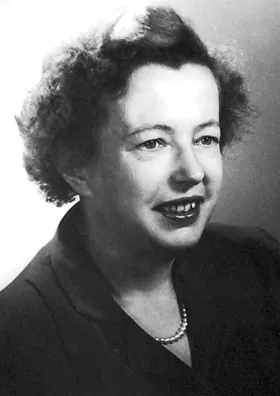 Maria Göppert Mayer1906–1972 · Physics
 Hans Bethe1906–2005 · Physics
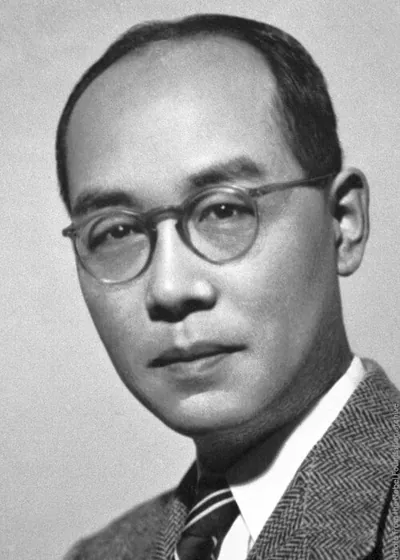 Hideki Yukawa1907–1981 · Physics
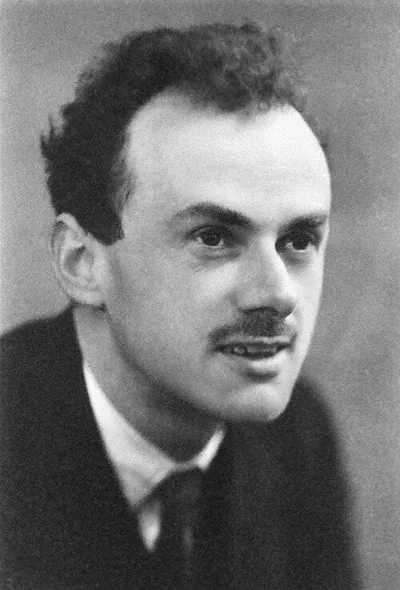 Paul Dirac1902–1984 · Physics
 Lev Landau1908–1968 · Physics