
Joseph Weber
American physicist who built the first gravitational wave detectors · 1919–2000
- Born
- May 17, 1919
- Died
- September 30, 2000
- Country
- United States
- Section
- Physics
Biography
Joseph Weber (Paterson, New Jersey, 1919 – Pittsburgh, 2000) was an American physicist who spent much of his career trying to detect gravitational waves, ripples in spacetime predicted by Einstein's general theory of relativity. He worked in the second half of the twentieth century, when experimental physics was beginning to have the electronics needed to probe very faint phenomena. He matters because he built the first detector of these waves and so opened the path to the observatories that recorded them for the first time decades later.
Weber was born to Yiddish-speaking Jewish immigrants. He was first named Yonah, and his surname was taken from an available passport so that his father could emigrate, which left the family with little paperwork. After a bus accident at the age of five he lost the ability to speak for a time; when he recovered, the Yiddish accent had gone, replaced by the middle-American diction of his speech therapist. He graduated from high school in Paterson in 1935 and began at Cooper Union, but won a competitive exam for the United States Naval Academy, from which he graduated in 1940, partly to spare his family the cost of his keep.
He served in the Navy during the Second World War, rising to lieutenant commander. He was on board the carrier USS Lexington when word of the attack on Pearl Harbor arrived, and later commanded a small submarine-chaser that took part in the invasion of Sicily in July 1943. Between 1943 and 1945 he studied electronics at the Naval Postgraduate School, and until 1948 he worked on electronic countermeasures in Washington. He left the Navy that year to teach engineering at the University of Maryland, on condition that he finish a doctorate quickly. He did so in 1951 at the Catholic University of America, writing on microwave techniques in chemical kinetics, mostly at night while already teaching.
His work with vacuum-tube microwave equipment led him to the idea of coherent microwave emission, that is, waves that move in step at a single frequency. A paper he submitted for a June 1952 conference in Ottawa is generally regarded as the earliest public lecture on the principles behind the maser and laser. Charles Townes, who was working along similar lines, asked for a copy. Weber was nominated for the Nobel Prize in Physics in 1962 and 1963 for this work, but the 1964 prize went to Townes, Basov and Prokhorov. Curious about general relativity, he spent a 1955–1956 sabbatical, funded by a Guggenheim Fellowship, studying gravitational radiation with John Archibald Wheeler in Princeton and at Leiden. In 1957 he heard Richard Feynman describe the sticky bead argument, a thought experiment on how such waves might be detected.
His answer was a large metal bar. A passing gravitational wave would, in principle, stretch and squeeze it very slightly. Weber built an aluminium cylinder about a metre across and weighing around 3.5 tonnes, isolated in a vacuum and surrounded by piezoelectric crystals, which produce a small voltage when squeezed. Completed in 1965, it was, he claimed, sensitive to strains of one part in 10^16. To rule out false signals he built a second bar at Argonne National Laboratory near Chicago, so that only signals seen in both would count. He recorded a first coincidence in 1968, and in 1970 noticed that the effects peaked when both bars pointed toward the galactic centre. In 1969 he announced at a relativity conference that he had detected gravitational waves.
The claim did not survive checking. In 1972 Heinz Billing at the Max Planck Institute for Physics in Munich built a similar detector and found nothing. Richard Garwin of IBM built another that registered a single pulse in six months, most likely noise. David Douglass later found a programming error in Weber's analysis which had manufactured daily signals out of noise by ignoring random phase. Garwin confronted Weber publicly at MIT in 1974, and the dispute continued in letters to Physics Today. In 1987 Weber lost his main funding from the National Science Foundation, and for the rest of his life he paid for his research himself.
Alongside this he worked on neutrino detection, using sapphire crystals and publishing results that contradicted other experiments, though his ideas remain under test. His personal life included a first marriage to his high-school classmate Anita Straus, which ended with her death in 1971, and a second to the astronomer Virginia Trimble. He died in Pittsburgh in 2000 during treatment for lymphoma diagnosed about three years earlier.
His legacy is mixed. His bars did not reliably detect gravitational waves, yet many researchers regard him as the founding father of the field. When the LIGO collaboration announced the first direct detection in 2016, several speakers credited him as its founder, and his former student Robert Forward later built the first laser interferometer detector, an idea found in Weber's notebooks. His name now appears on an award for astronomical instrumentation.
Main contributions
- 1952Earliest public lecture on the principles behind the maser and laser, given at a conference in Ottawa.
- 1965First gravitational wave detector, an aluminium bar isolated in a vacuum and fitted with piezoelectric crystals.
- 1968Recording of the first coincidence between his two separate detectors.
- 1969Announcement at a relativity conference that he had detected gravitational waves, a result other groups did not confirm.
- 1972Sending a gravitational wave detector to the Moon on the Apollo 17 mission.
- Proposal to detect neutrinos using sapphire crystals, with experimental results that contradicted other studies.
Teachers and students
Studied under:
Taught:
Trivia and anecdotes
The family name
According to the usual account, his father took the surname Weber from an available passport in order to emigrate, which left the family with few documents of their own.
The Lexington's sinking
He often told students that the carrier Lexington glowed incandescent as she slipped beneath the waves after being mortally damaged at the Battle of the Coral Sea in 1942.
Their contemporaries
While Joseph Weber was alive (1919–2000)…
Alive at the same time
Discovered or invented in those years
- 1925TelevisionA system that sends moving pictures and sound over distance and shows them on a receiver, the television set.
- 1925Quantum mechanicsPhysical theory describing how matter and light behave at atomic and subatomic scales, where energy is exchanged in minimal packets and results are expressed as probabilities.
- 1931Big BangA cosmological model describing how the universe expanded from an early state of extreme density and temperature, about 13.8 billion years ago.
- 1945ComputerA programmable machine that takes in data, processes it by following stored instructions, and produces results, able to switch tasks simply by running different software.
- 1969InternetA global network of interconnected computer networks that communicate using the TCP/IP protocol suite.
- 1989World Wide WebA system of linked documents and resources, connected by hyperlinks and accessed over the Internet with web browsers.
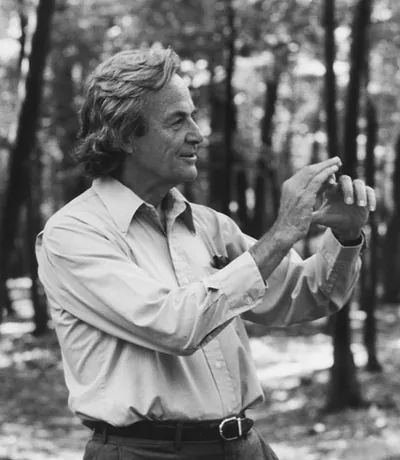 Richard Feynman1918–1988 · Physics
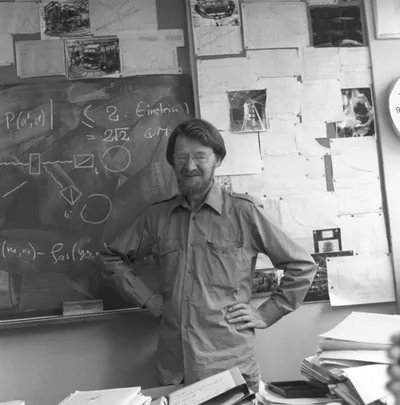 John Stewart Bell1928–1990 · Physics
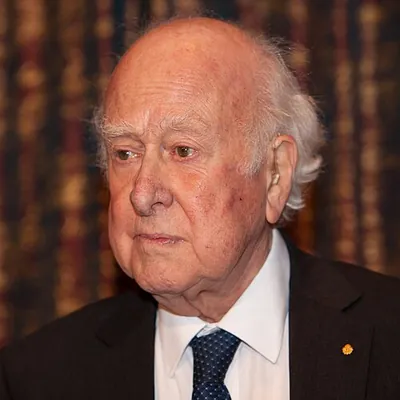 Peter Higgs1929–2024 · Physics
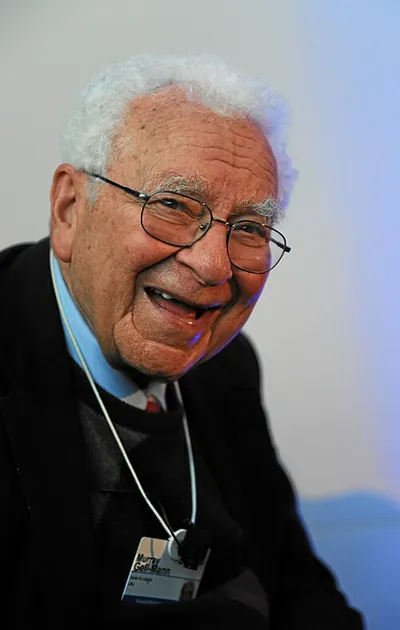 Murray Gell-Mann1929–2019 · Physics
 Lev Landau1908–1968 · Physics
 Hideki Yukawa1907–1981 · Physics
