
Ralph Kronig
German-American physicist who proposed the idea of electron spin and gave his name to a crystal model and a mathematical relation in optics · 1904–1995
- Born
- March 10, 1904
- Died
- November 16, 1995
- Country
- Germany
- Section
- Physics
Biography
Ralph de Laer Kronig (Dresden, 10 March 1904 - Zeist, 16 November 1995) was a German-American physicist who worked in the first half of the twentieth century, when quantum mechanics, the theory that describes how atoms and particles behave, was still being built. He is remembered above all for proposing in 1925 that the electron spins on its own axis, an idea now called spin, and for his work on the absorption of X-rays by crystals and on a mathematical relation that bears his name alongside that of Hans Kramers.
Kronig was born in Dresden to German parents. He received his primary and secondary education there, then moved to New York to study at Columbia University, where he earned his doctorate in 1925. Before he finished, the physicist Paul Ehrenfest, who visited the United States in 1924, advised him to return to Europe, and Kronig followed that advice later the same year. He visited the leading centres of theoretical physics in Germany and in Copenhagen, where the new quantum mechanics was being debated intensely.
In January 1925, while still a student, he heard Wolfgang Pauli speak in Tübingen. Pauli had just argued that every electron in an atom needs four quantum numbers, that is, four values that describe its state. Kronig reasoned that a simple way to explain the fourth number was to imagine the electron spinning like a top. Pauli and Heisenberg rejected the idea at once, and Pauli dismissed it with a famous remark: it was very clever, but nature is not like that. Kronig decided not to publish. A few months later, George Uhlenbeck and Samuel Goudsmit put forward spin in the Netherlands, and textbooks usually credit them with the discovery. The surviving accounts, however, show that Kronig had raised the idea earlier.
Back in New York, he joined the Columbia physics department in 1926, first as an instructor and then as an assistant professor. In 1927 he left the United States for good and worked in Copenhagen, London and Zurich, where he spent a year as Pauli's assistant. That same year, together with Isidor Isaac Rabi, he produced the first solution of the Schrödinger equation for the rigid symmetric top, a model of a spinning body. Heisenberg also drew him into his early work: in May 1925 he wrote Kronig several letters, one of which contained equations that anticipated his matrix mechanics.
Around 1930 he settled in the Netherlands. He worked in Utrecht and Groningen as an assistant to Dirk Coster, and in 1931 he joined the Delft University of Technology as an associate professor. He became a full professor there in 1939 and kept that post until his retirement in 1969. From 1959 to 1962 he served as the university's rector. He had been a member of the Royal Netherlands Academy of Arts and Sciences since 1946, and he received the Max Planck Medal in 1962.
In 1931 and 1932 he published the first theory of the fine structure of X-ray absorption, the way a material soaks up X-rays with intensities that rise in small steps. His idea was that an electron moving through the orderly lattice of atoms in a crystal finds zones where it can travel and zones where it cannot. In 1931 he also presented the Kronig-Penney model, a one-dimensional picture of a crystal that shows how electrons sort themselves into allowed and forbidden energy bands. In 1932 he applied similar ideas to molecules, with help from a student, H. Petersen, and the approach was later applied to germanium tetrachloride. Separately, in 1926 or 1927 Kronig and Kramers showed independently that the dispersion of light, meaning how the refractive index changes with frequency, and absorption are linked, because a material cannot respond before the cause that produces the response.
Kronig bore no grudge against Pauli over the spin episode. The two remained friends for many years and kept exchanging ideas by letter. The story of his career was told in a 1989 biography by Stumm von Bordwehr.
His legacy lies in several areas. The Kronig-Penney model is still taught in solid-state physics courses, and the Kramers-Kronig relation is used across pure and applied physics. His theory also launched a long series of studies of X-ray absorption, to the point that until the 1970s around 2 percent of the papers in Physical Review were devoted to the subject. Kronig died in Zeist at the age of 91.
Main contributions
- 1925Proposal of electron spin: the idea that the particle rotates on its own axis, which he never published.
- 1926Kramers-Kronig relation: links the dispersion of light to its absorption by a material.
- 1927First solution of the Schrödinger equation for the rigid symmetric top, a spinning body, obtained with Isidor Isaac Rabi.
- 1931Kronig-Penney model: a one-dimensional crystal that explains how electrons are divided into allowed and forbidden bands.
- 1931First theory of the fine structure of X-ray absorption, the basis of what later became known as EXAFS.
- 1932Theory of short-range order in molecules, a starting point for later studies of molecular structure.
Teachers and students
Studied under:
Taught:
Trivia and anecdotes
A spin never published
Kronig dropped the idea of spin after Pauli's criticism and did not publish it. Months later Uhlenbeck and Goudsmit made it public, and history now credits them.
A change of name
In later years he became known as Ralph de Laer Kronig, a form of his name that his 1989 biography traces to his family background.
Their contemporaries
While Ralph Kronig was alive (1904–1995)…
Alive at the same time
Discovered or invented in those years
- 1916Black holeA region of space where gravity is so strong that nothing, not even light, can escape once it crosses a certain boundary.
- 1925TelevisionA system that sends moving pictures and sound over distance and shows them on a receiver, the television set.
- 1925Quantum mechanicsPhysical theory describing how matter and light behave at atomic and subatomic scales, where energy is exchanged in minimal packets and results are expressed as probabilities.
- 1931Big BangA cosmological model describing how the universe expanded from an early state of extreme density and temperature, about 13.8 billion years ago.
- 1945ComputerA programmable machine that takes in data, processes it by following stored instructions, and produces results, able to switch tasks simply by running different software.
- 1969InternetA global network of interconnected computer networks that communicate using the TCP/IP protocol suite.
 J. Robert Oppenheimer1904–1967 · Physics
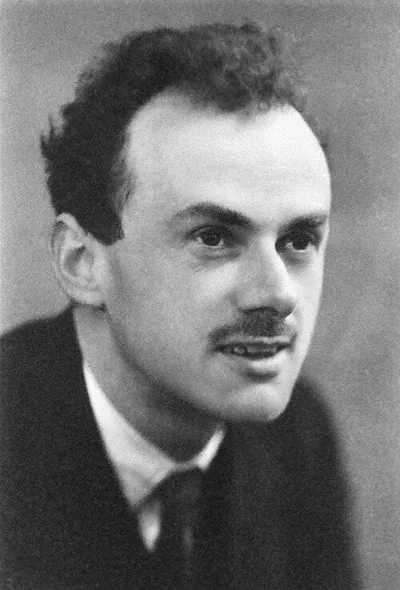 Paul Dirac1902–1984 · Physics
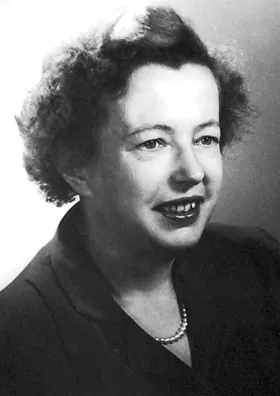 Maria Göppert Mayer1906–1972 · Physics
 Eugene Paul Wigner1902–1995 · Physics
 Hans Bethe1906–2005 · Physics
 Enrico Fermi1901–1954 · Physics
