
Rudolf Ludwig Mössbauer
German physicist, discoverer of the Mössbauer effect and 1961 Nobel Prize in Physics laureate · 1929–2011
- Born
- January 31, 1929
- Died
- September 14, 2011
- Country
- Germany
- Section
- Physics
- Awards
- Nobel Prize in Physics
Biography
Rudolf Ludwig Mössbauer (Munich, 1929 – Grünwald, 2011) was a German physicist whose 1957 discovery gave his name to one of the most delicate effects in nuclear physics. He shared the 1961 Nobel Prize in Physics with the American Robert Hofstadter. He worked in the second half of the twentieth century, when physicists were probing the interior of the atomic nucleus with increasingly precise radiation. His significance lies in turning a laboratory observation into a tool that is still used in chemistry, geology and materials science.
He was born on 31 January 1929 in Munich, the city where most of his life unfolded. He studied physics at the Technical University of Munich (TUM), the same institution that would later bring him back as a professor. He prepared his diploma thesis in the applied physics laboratory led by Heinz Maier-Leibnitz and graduated in 1955. Maier-Leibnitz was his main mentor: he supervised his work and, in time, was the scientist whose post at the Institut Laue-Langevin Mössbauer would take over. That relationship of trust shaped much of his academic career.
After graduating he joined the Max Planck Institute for Medical Research in Heidelberg. That institute was not part of a university and had no right to award doctorates, so Mössbauer remained formally attached to Maier-Leibnitz and passed his PhD examination in Munich in 1958. His research focused on gamma rays, a very energetic form of electromagnetic radiation emitted by atomic nuclei when they move from one energy state to another. The difficulty was recoil: when a nucleus emits a gamma ray, it kicks back slightly, much as a cannon moves when fired. That loss of energy usually prevents an identical nucleus from absorbing the photon. Mössbauer observed that, using iridium-191 under suitable conditions, a significant fraction of nuclei emitted and absorbed gamma rays without noticeable recoil, so the energy was conserved with unusual precision. This phenomenon is the Mössbauer effect, discovered in 1957. Its explanation requires the nucleus to be firmly bound within a solid, which absorbs the recoil rather than letting the atom move.
The discovery was quickly put to use. In 1960 Robert Pound and Glen Rebka exploited the effect to measure the redshift of gamma radiation in Earth's gravitational field. This experiment, known as Pound-Rebka, was one of the first precision tests of Albert Einstein's general theory of relativity. Yet the effect's lasting importance lies less in that test than in Mössbauer spectroscopy, a technique that measures extremely small energy differences in nuclei and reveals how atoms are bonded within a material. It allows minerals, alloys and chemical compounds to be studied with a fineness that was previously out of reach.
In 1960, on the suggestion of Richard Feynman, Mössbauer was invited to the California Institute of Technology (Caltech) in the United States. There he advanced quickly from research fellow to senior research fellow and, in early 1962, was appointed a full professor of physics. That same year the Nobel Prize was awarded to him jointly with Hofstadter, who had studied the internal structure of protons and neutrons by scattering electrons. The prize consolidated his international reputation, although he always stressed that the effect had come out of relatively modest laboratory work.
In 1964 the TUM persuaded him to return as a full professor. As a condition, the physics faculty introduced a system of departments, strongly influenced by his American experience. This model stood in sharp contrast to the traditional, hierarchical chair system of German universities, and it gave the TUM a prominent place in the country's physics. In 1972 Mössbauer succeeded Maier-Leibnitz as director of the Institut Laue-Langevin in Grenoble, just as its newly built high-flux reactor, designed to produce neutrons in large quantities, began operating. After a five-year term he went back to Munich, where he found that overarching legislation had reversed much of his reform. Until the end of his career he spoke bitterly of what he called the destruction of the department. Meanwhile his research had moved toward neutrino physics, the study of nearly massless, electrically neutral particles that pass through matter while barely interacting with it. He became professor emeritus in 1997.
Mössbauer was regarded as an excellent teacher, able to handle highly specialised material before varied audiences. He gave courses on neutrino physics, neutrino oscillations, the unification of electromagnetic and weak interactions, and the interaction of photons and neutrons with matter. In 1984 he lectured undergraduates taking the physics course to about 350 people. He stressed that the essential skill was being able to explain what one had learned, since professional life is full of examinations, applications and discussions with colleagues. He recommended rehearsing those explanations with a fellow student or, if none was available, with anyone at all, even one's mother or the cat. In his personal life he married Elizabeth Pritz in 1957, and they had a son, Peter, and two daughters, Regine and Susi. The marriage ended in divorce in 1983, and in 1985 he married Christel Braun. He died in Grünwald, near Munich, on 14 September 2011, at the age of 82.
Mössbauer's legacy is divided among the effect that carries his name, the spectroscopy technique that grew from it, and a view of university teaching that he defended both in Munich and in the United States. The effect remains an analytical tool in laboratories around the world, and his career shows how a seemingly technical experiment can open whole fields of research.
Main contributions
- 1957Mössbauer effect: recoil-free emission and absorption of gamma rays by nuclei, observed in iridium-191, with almost no loss of energy.
- 1960Application of the effect in the Pound-Rebka experiment, which measured the redshift of gamma radiation in Earth's gravitational field.
- 1961Nobel Prize in Physics, shared with Robert Hofstadter for the effect that bears his name and for related work.
- 1964Introduction at the Technical University of Munich of a department system, in contrast to the traditional German chair model.
Teachers and students
Trivia and anecdotes
Advice to his students
He insisted that the key skill was being able to explain what one had learned, and suggested practising the explanation with a classmate or, failing that, with one's mother or the cat.
A decisive recommendation
His move to Caltech came on the suggestion of Richard Feynman, another leading physicist of the period.
Reforms reversed
After returning from Grenoble, overarching legislation undid much of his department reform, a outcome he regretted for the rest of his career.
Their contemporaries
While Rudolf Ludwig Mössbauer was alive (1929–2011)…
Alive at the same time
Discovered or invented in those years
- 1931Big BangA cosmological model describing how the universe expanded from an early state of extreme density and temperature, about 13.8 billion years ago.
- 1932NeutronA subatomic particle with no net electric charge, found in the nucleus of almost every atom alongside protons.
- 1945ComputerA programmable machine that takes in data, processes it by following stored instructions, and produces results, able to switch tasks simply by running different software.
- 1969InternetA global network of interconnected computer networks that communicate using the TCP/IP protocol suite.
- 1973Mobile phoneA handheld wireless phone that lets people make and receive calls while moving across a cellular network area.
- 1989World Wide WebA system of linked documents and resources, connected by hyperlinks and accessed over the Internet with web browsers.
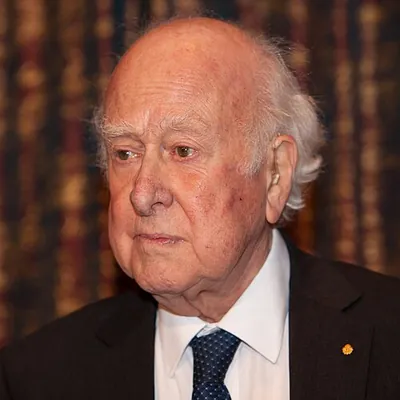 Peter Higgs1929–2024 · Physics
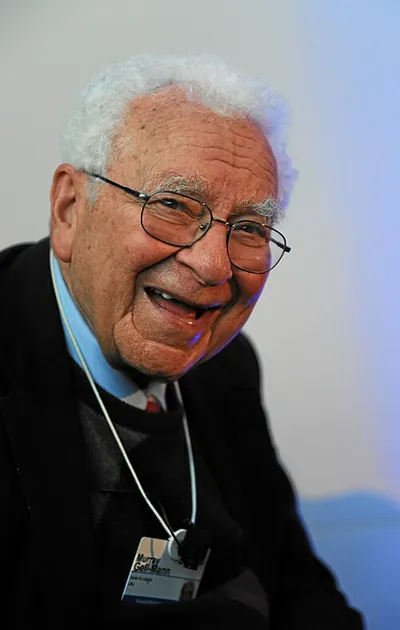 Murray Gell-Mann1929–2019 · Physics
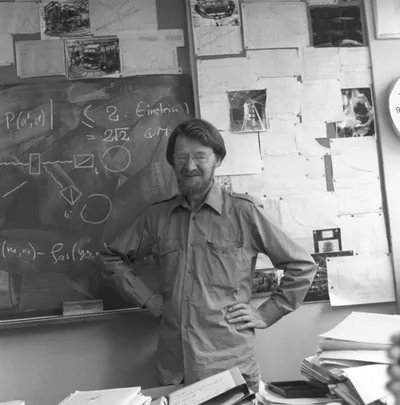 John Stewart Bell1928–1990 · Physics
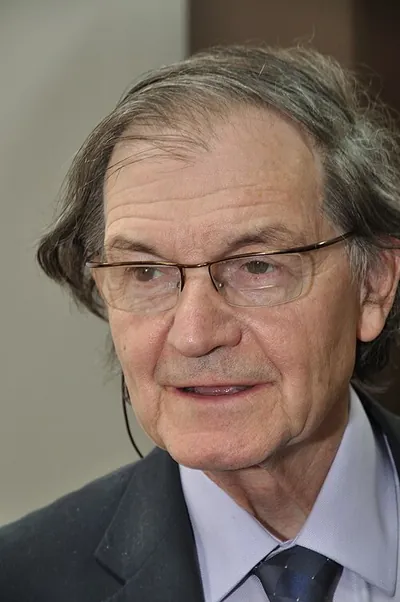 Roger Penrose1931 · Physics
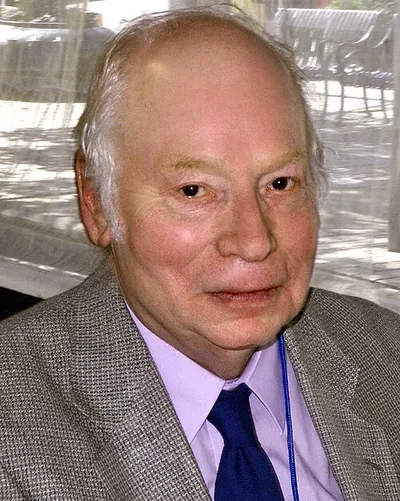 Steven Weinberg1933–2021 · Physics
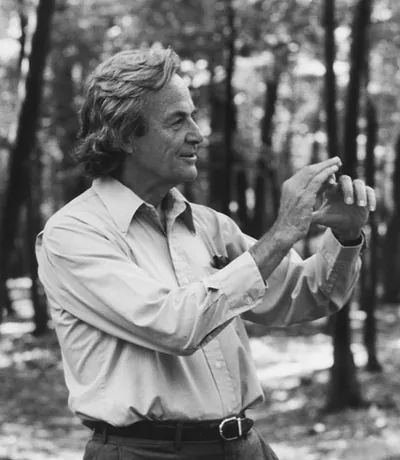 Richard Feynman1918–1988 · Physics
