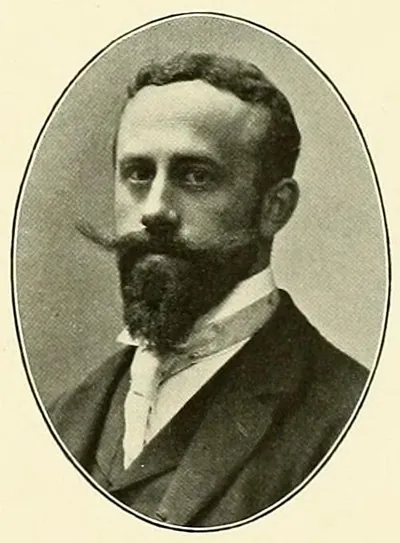
Erich von Tschermak
Austrian biologist, botanist and agronomist, co-rediscoverer of Mendel's laws of heredity · 1871–1962
- Born
- November 15, 1871
- Died
- October 11, 1962
- Country
- Austria, Nazi Germany, Austria–Hungary
- Section
- Biology
Biography
Erich von Tschermak (Vienna, 1871 - Vienna, 1962) was an Austrian biologist, botanist and agronomist who is counted among the scientists who independently rediscovered the laws of heredity first described by Gregor Mendel in the 1860s. In 1900 he reached similar conclusions alongside Hugo de Vries and Carl Correns, and his name is usually mentioned with theirs in the history of genetics. His importance lies both in that historical coincidence and in his practical work on crops.
He was born in Vienna on 15 November 1871 into a family of scholars. His father, Gustav Tschermak von Seysenegg, was a mineralogist born in Moravia. On his mother's side he was a grandson of the botanist Eduard Fenzl, who had taught botany to Gregor Mendel during Mendel's student years in Vienna, so plants were part of his upbringing from an early age. He earned his doctorate at the University of Halle in Germany in 1896. His brother Armin von Tschermak-Seysenegg also worked in genetics, and sources note that his influence shaped much of Erich's research.
Around 1900 Tschermak was working on crosses between cultivated plants. By crossing varieties that differed in visible traits, he noticed patterns in the offspring that matched those Mendel had described. Mendel had proposed that each trait is passed on through separate units, later called genes, which combine in predictable ways. Tschermak published his findings in June 1900, the same year as De Vries and Correns, which is why the three are usually credited together. Mendel's original paper had gone largely unnoticed for decades, and this rediscovery gave it a second life.
His career joined research with teaching. He began teaching at the University of Agricultural Sciences in Vienna in 1901 and later became a professor there, although the sources give somewhat different dates for that promotion, so the exact year should be read with caution. His applied work aimed at new crops that resisted disease, including hybrids of wheat and rye and of oats. A hybrid is the offspring of two different varieties or species, bred to combine their strengths. In 1903 he published a theory of cryptomery and cryptohybridism, ideas about hereditary traits that stay hidden within an organism. In 1949 he wrote about seed formation without fertilization, meaning seeds produced without the usual union of egg and pollen.
His name is linked with other scientists in histories of genetics, but the sources describe no personal rivalries, so it is best not to dramatize any. He received several honours: in 1912 he became a member of the Royal Swedish Academy of Agriculture, in 1950 an honorary doctorate from the University of Vienna, and in 1951 membership of the Royal Swedish Academy of Physiography, along with the Ring of Honour of the City of Vienna that same year. He also received an Austrian decoration for science and art.
He died in Vienna on 11 October 1962. His legacy rests on two things: confirming Mendel's laws in practice at a decisive moment, and developing crops more resistant to disease. His career shows how genetics grew out of the meeting of the laboratory and the field.
Main contributions
- 1900Independent rediscovery of Mendel's laws of heredity, published in June 1900.
- 1900Work Über künstliche Kreuzung, on the artificial crossing of plants.
- 1903Theory of cryptomery and cryptohybridism, on hereditary traits hidden within an organism.
- 1949Samenbildung ohne Befruchtung, a study of seed formation without fertilization.
- Breeding of wheat-rye and oat hybrids resistant to disease.
Teachers and students
Trivia and anecdotes
Grandson of Mendel's teacher
His maternal grandfather, the botanist Eduard Fenzl, taught botany to Gregor Mendel during Mendel's student years in Vienna.
Son of a mineralogist
His father, Gustav Tschermak von Seysenegg, was a mineralogist born in Moravia.
Almost simultaneous publication
He published his results in June 1900, the same year as De Vries and Correns, reaching similar conclusions independently.
Their contemporaries
While Erich von Tschermak was alive (1871–1962)…
Alive at the same time
Discovered or invented in those years
- 1876TelephoneA device that carries the human voice over distance by turning sound into electrical signals and back into sound at the other end of the line.
- 1884CarA road vehicle with four wheels and its own engine, mainly built to carry people.
- 1903AirplaneA fixed-wing aircraft, heavier than air, powered by engines or rockets, that stays aloft because its wings generate lift.
- 1925TelevisionA system that sends moving pictures and sound over distance and shows them on a receiver, the television set.
- 1931Big BangA cosmological model describing how the universe expanded from an early state of extreme density and temperature, about 13.8 billion years ago.
- 1945ComputerA programmable machine that takes in data, processes it by following stored instructions, and produces results, able to switch tasks simply by running different software.
 Hans Spemann1869–1941 · Biology
 Thomas Hunt Morgan1866–1945 · Biology
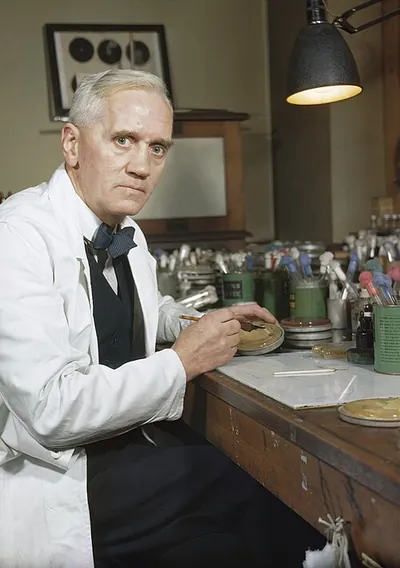 Alexander Fleming1881–1955 · Biology
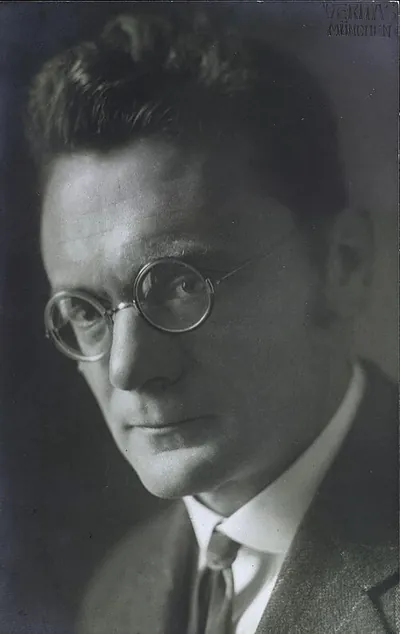 Karl von Frisch1886–1982 · Biology
 Santiago Ramón y Cajal1852–1934 · Biology
 Hermann Joseph Muller1890–1967 · Biology
